DECEMBER 2023 READING LIST
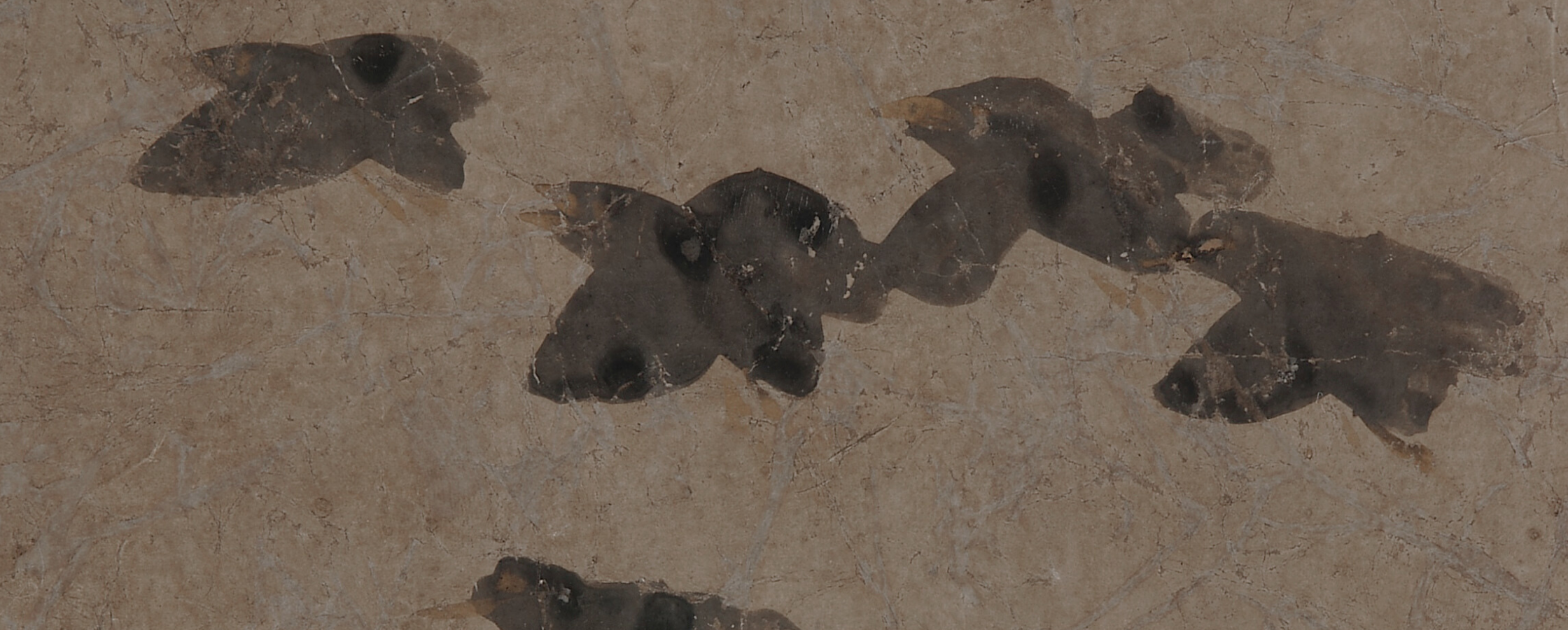
Attributed to Hon'ami Koetsu. Birds flying over waves, 1615-1868. Smithsonian American Art Museum
BIRD BY BIRD BY ANNIE LAMOTT
"Thirty years ago, my older brother, who was ten years old at the time, was trying to get a report on birds written that he'd had three months to write. [It] was due the next day. We were out at our family cabin in Bolinas, and he was at the kitchen table close to tears, surrounded by binder paper and pencils and unopened books on birds, immobilized by the hugeness of the task ahead. Then my father sat down beside him, put his arm around my brother's shoulder, and said. 'Bird by bird, buddy. Just take it bird by bird.’"
Besides Stephen King’s On Writing, Bird by Bird is one book everyone recommends when venturing into the world of writing. Lamott is wry, funny, and, like On Writing, her book reads more like a memoir than a how-to. Chapters on "Writers' Block," "Writing Groups,” and "How Do You Know When You're Done?” are just a few examples of how Lamott weaves an aspiring writer into a better understanding, plus a good reality check as to the way writing works in the real world.
I liked the witty commentary on how to respond to first-draft critiques, rejections, and the actual publication process. Her examples were helpful, and I liked how honest Lamott was with her views on other writers. The task of writing a book is daunting, and Bird by Bird helped me find the joy and laughter in the idea of writing a book.
The book is also very grounding and recognizes the need for transparency in novel writing. I especially liked her matter-of-fact way of writing—straightforward and frank. For example:
“You own everything that happened to you. Tell your stories. If people wanted you to write warmly about them, they should have behaved better.”
I highly recommend this book, like so many others, and encourage new writers to read through this short book as it is very insightful and lighthearted yet open-eyed and honest. My favorite line from the book really hits home, not as just advice for writing, but advice for everyday living.
“You don’t always have to chop with the sword of truth. You can point with it, too.”
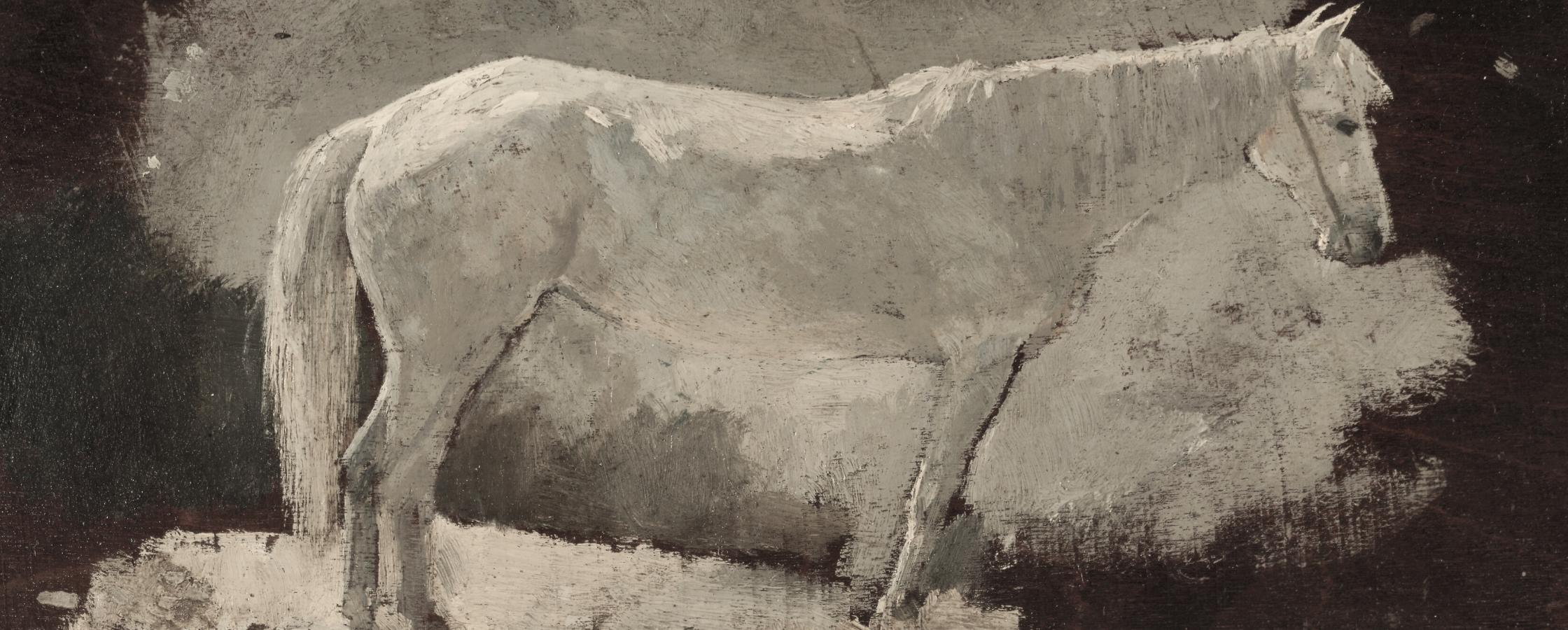
Winslow Homer. White Mare, c. 1868. The Cleveland Museum of Art
THE PALE HORSEMAN BY BERNARD CORNWELL
The second installment of Bernard Cornwell’s epic saga of the making of England. At the end of The Last Kingdom, the Danes had been defeated, but the triumph of the English is not destined to last. The Danish Vikings quickly invade and occupy three of England’s four kingdoms—and all that remains of the once proud country is a small piece of marshland, where Alfred, King of Wessex, and his family live with a few soldiers and retainers, including Uhtred, the dispossessed English nobleman who was raised by the Danes.
Uhtred believes himself a Dane at heart, but when Iseult, a powerful sorceress, enters Uhtred’s life, he is forced to consider feelings he’s never confronted before—and Uhtred discovers, in his moment of greatest peril, a newfound loyalty and love for his native country and ruler.
I considered not continuing this series because of the depictions of war, but I was drawn back in with Cornwell’s vivid historical descriptions, bloodshed notwithstanding. The Pale Horseman expands on Uhtred's character, who at times seems confused and unsure of which path to follow. The character arc is strong, though: Uhtred, when given a choice, tends to do good, even if fate does not always treat him well.
“Life is simple,” I said. “Ale, women, sword, and reputation. Nothing else matters.”
This quote simply puts the essence of the story and what one might expect to read about. Even so, in the end, those who enjoy history get to read about the incredible feat of Alfred and his army, who kept the dream of England alive, thereby rendering the present world with the tale of Danish defeat rather than Saxon extinction.
I am still planning to read more of the Saxon series, but given its bloody, descriptive nature, I intend to space out each book so I can take a break from shield walls and the butchery of the 9th-century war. The history is too fascinating to pass up, and I look forward to reading more about how England was formed through Uhtred's fictional eyes.
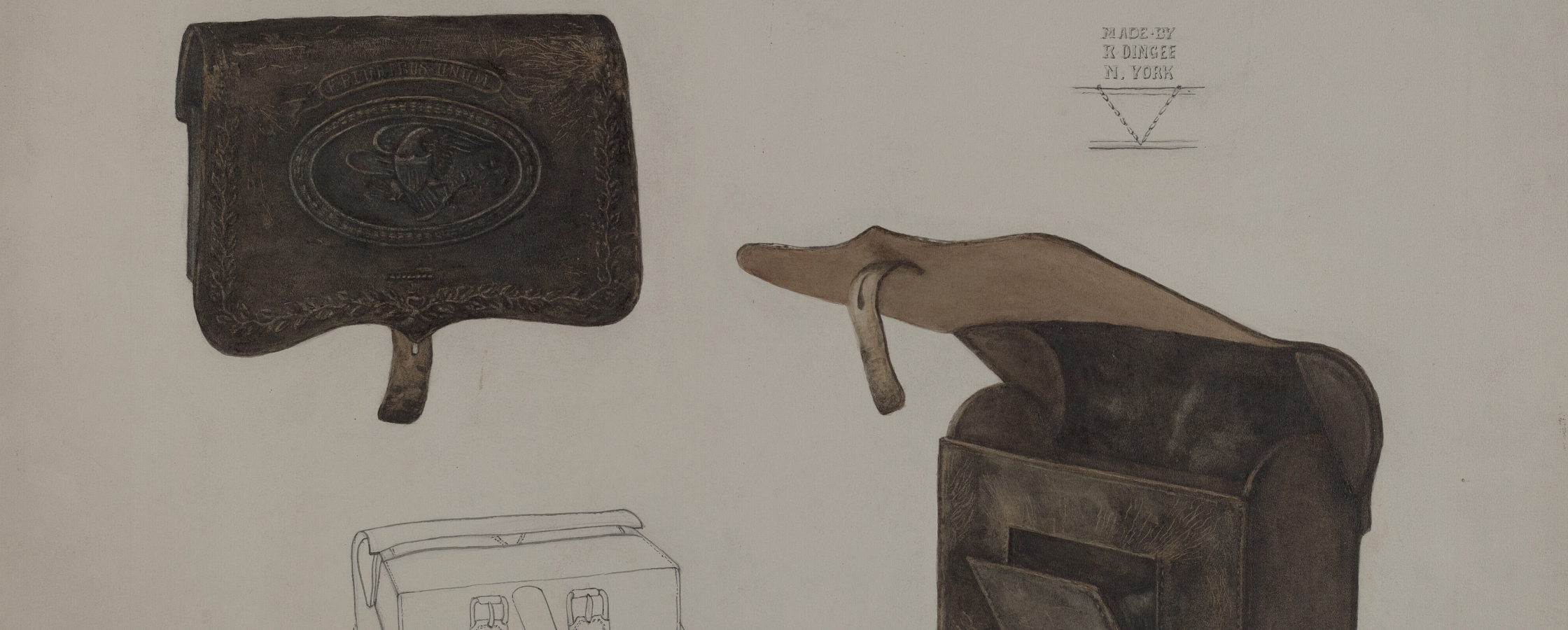
Stella Mosher. Mail Pouch, c. 1942. National Gallery of Art
THE CONSEQUENCES OF FEAR BY JACQUELINE WINSPEAR
While on a delivery, young Freddie Hackett, a message runner for a government office, witnesses an argument that ends in murder, and then, when he arrives at the delivery address, he’s shocked to come face to face with the killer.
Dismissed by the police, Freddie searches for Maisie Dobbs, a recipient of one of his governmental messages. Maisie is working secretly for the Special Operations Executive and must be cautious as she pursues the case. Her two worlds collide when she spots the killer in a place she least expects.
The Consequences of Fear is the sixteenth installment in the Maisie Dobbs series. Much of the world is embroiled in World War II, and Maisie is pulled back into her investigative duties. Winspear is great at bringing to life possible stories of everyday people who endured WWI and WWII. She captures the mindset of the people in England well and shows what life in London during the Blitz was like. I have read history books, but non-fiction can be too horrific, and a novel, like this one, sheds light on history without all the gory details.
Even though there is a seventeenth book in the series, I do not plan to read it. I had been teetering back and forth about whether to read this series from the beginning, and I felt done by the time I finished this book. Most of what protagonists would want comes to pass, and I feel as though there is little motivation to read another in the series. I will also add that I was not a fan of Maisie’s love interest in the story, and that put a damper on my reading motivation.
Overall, I would say several books were wonderful, insightful, and even impactful. Books 1-4, 7, 12, and 14 were the best of the series. The first few were rich in history and the excitement of a series' beginnings. Book seven, The Mapping of Love and Death, was my favorite in the series and the one that prodded me and kept me going. The way Winspear took the story of a newly discovered WWI soldier and created an entire story from her inspiration is impressive. A Journey to Munich was chilling for its up-close, albeit fictional, view of the Third Reich, even before the invasion of Poland. Finally, book 14, To Die But Once, provided a riveting tale of the events at Dunkirk. This book also had a personal touch as it related a fictionalized version of the author’s own father, who had been charged with testing fire-retardant paint during WWII. The books in which Winspear uses personal accounts from her family are her best work.
I am glad that I read through the Maisie Dobbs series, but I do think my time with the Lady Investigator has come to an end. It has been a good cozy mystery series that is not gory or vulgar, but I am ready for a change of pace and a new main character. I encourage anyone who likes cozy mysteries and the pace of slow reading to dive into the series, but be aware that some storylines are repeated or a little redundant.
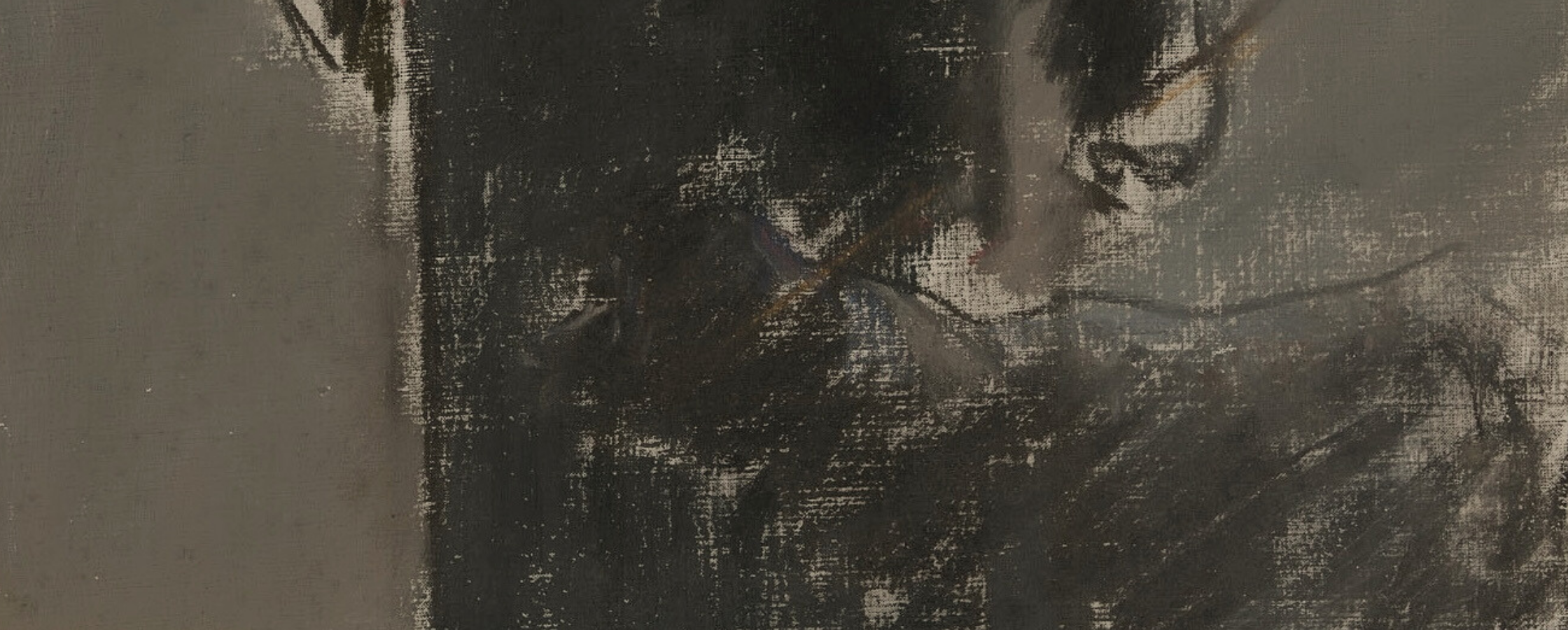
Édouard Manet. The Man with the Dog, c. 1882. The Art Institute of Chicago
THE INCREDIBLE JOURNEY BY SHEILA BURNFORD
A classic from 1961, The Incredible Journey is the story of three pets with an instinct that told them that the way home lay to the west. And so the doughty young Labrador retriever, the roguish bull terrier, and the indomitable Siamese set out through the Canadian wilderness. Separately, they would soon have died. But together, the three house pets faced starvation, exposure, and wild forest animals as they made their way home to the family they love.
In my effort to at least reach fifty books this year (still short of my goal of sixty), I read this book with my kids in a rare instance of them agreeing on a family book. I began the book with familiarity with the 90’s movie interpretation of the story, but I had no idea how good the book would be. Burnford is wonderful with description and her use of language. Every sentence felt like a mouthful of detail and descriptive language. It was a challenge of vocabulary and of finding a way to let the words roll smoothly.
“Anyone unaccustomed to the rather peculiar points of bull terrier beauty would have thought him a strange if not downright ugly dog, with the marked, down-faced arc of his profile, his deep-chested, stocky body and whip-tapered tail. But the true lover of an ancient and honorable breed would have recognized the blood and bone of this elderly and rather battered body; would have known that in his prime this had been a magnificent specimen of compact sinew and muscle, bred to fight and endure, and would have loved him for his curious mixture of wicked, unyielding fighter yet devoted and docile family pet, and above all for the irrepressible air of sly merriment which gleamed in his little slant eyes.”
Every chapter was moving and powerful, and even with the knowledge of the end, I kept finishing page after page, wondering how on earth the three traveling companions would ever make it home. My kids were riveted every night as I read through the eleven chapters, fully absorbed in the plight of the wandering animals and sharing my concern for their fate.
I highly encourage anyone who has not read The Incredible Journey to give it a try. The book is not merely for children; it is a wonderful read for anyone of any age. As a writer, I found this book inspiring from a language and vocabulary perspective. I rarely find a book that is even more enjoyable to read aloud than in silence, but this book met that mark. Perhaps my kids will ask me to read this book to them again before long, and I can see if it holds the same magic it did on our first reading.