OCTOBER 2025 READING LIST
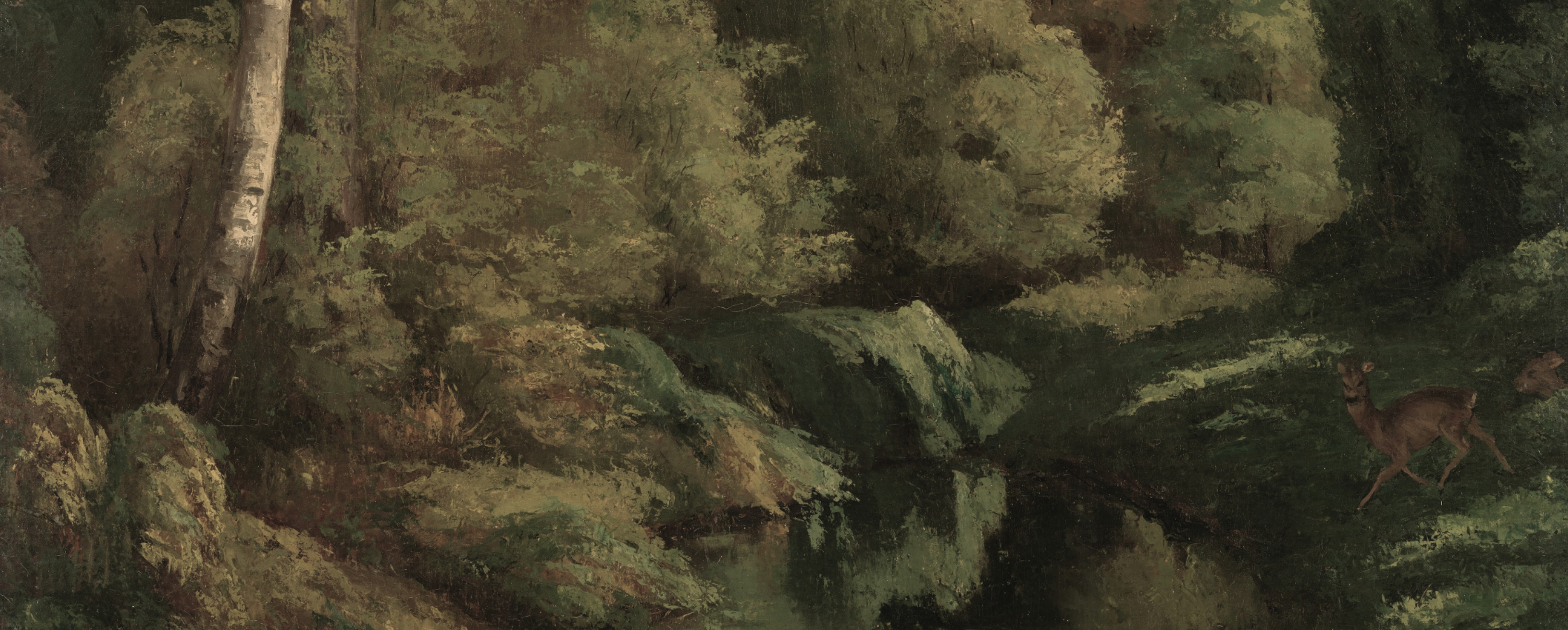
Gustave Courbet. View in the Forest of Fontainebleau, 1855. The Rijksmuseum
BAMBI: A LIFE IN THE WOODS BY FELIX SALTEN
Bambi's life in the woods starts off happily, with forest animals to play with—Friend Hare, the lively squirrel, the loud screech owl, and Bambi's twin cousins, the delicate Gobo and lovely Faline.
But winter arrives, and Bambi discovers that the woods are dangerous and full of things he doesn't grasp. The first snowfall makes it difficult to find food. Bambi's father, a noble stag, wanders the forest but keeps his distance from Bambi and his mother.
Then there is Man. He enters the forest armed with weapons that can harm animals. He perpetrates terrible acts against Gobo, Bambi's mother, and even Bambi himself. However, He cannot prevent Bambi from growing into a handsome stag and eventually becoming...the Prince of the Forest.
In my search for more books set in the wilderness, Bambi came to mind, and I was reminded that books inspired many of the Disney movies I grew up watching. Even though the book is considered a children's book, I enjoyed it immensely. What makes Bambi unique is that the animals' voices do not distract from the story or make the book childish. I almost felt privileged to get an animal's point of view (even though I know, logically, that isn’t possible).
First, the descriptions of the forest were wonderfully detailed. The book does not hold back on the gory realities animals face from weather, predators, and hunting. Gobo's story was tragic, and Bambi's life was harsh. What Salten does so well is to provide a sense of relativity to an animal's life. Humans understand social awkwardness, love, fear, betrayal, and enlightenment.
Second, I was impressed by the way Salten presented Man as this faceless, unnamed creature of the woods. By not naming the danger, I was able to imagine what I fear hunting me down for sport and the horror of that reality. I especially liked the story's climax. The Old Prince is teaching Bambi about the order of the world and how Man is not as all-powerful as He thinks. This revelation was powerful both for the Young Prince and me.
I am thinking about reading more books that inspired children's movies. Peter Pan, Mary Poppins, and Grim's Fairy Tales are all classic books, but because of when I was born, I learned the stories of Neverland, Mr. Banks, and enchanted castles through Disney, not from Barrie, Travers, or the Brothers Grimm.
4.25/5 Stars
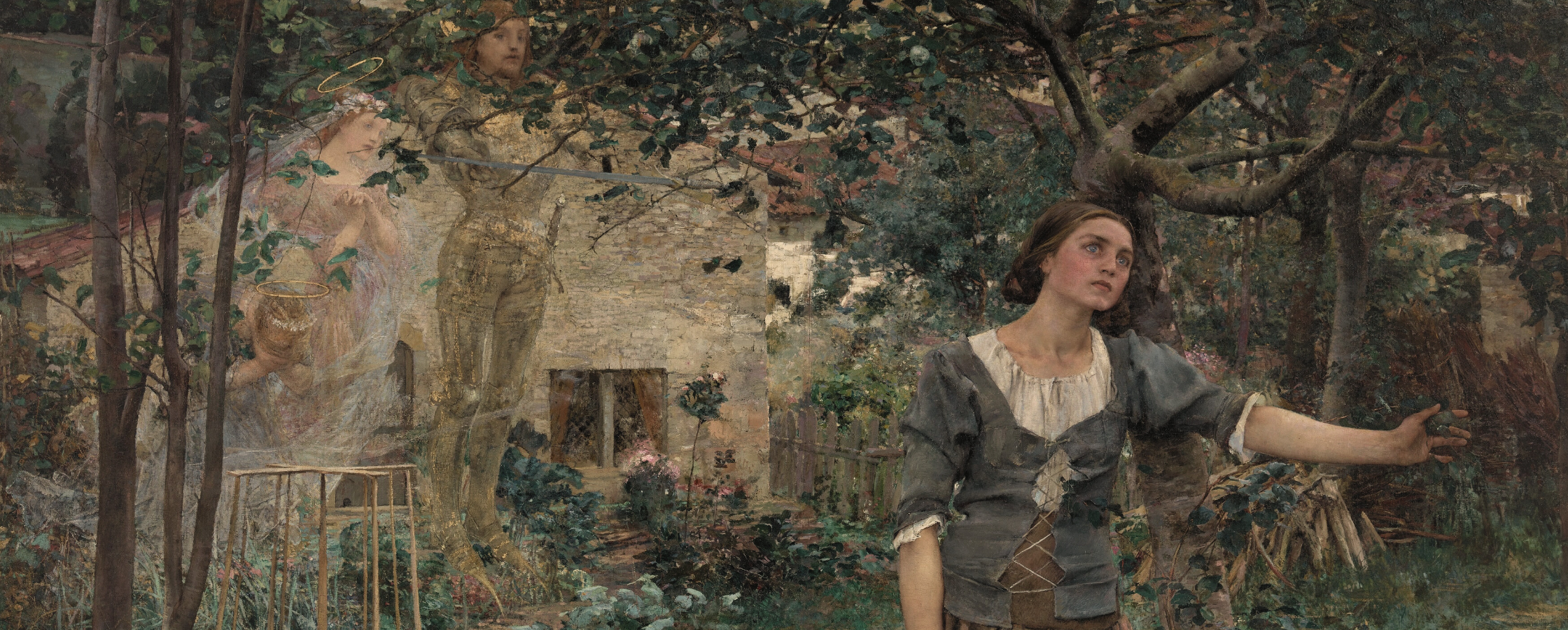
Jules Bastien-Lepage. Joan of Arc, 1879. The Metropolitan Museum of Art
THE MAID AND THE QUEEN: THE SECRET HISTORY OF JOAN OF ARC BY NANCY GOLDSTONE
Yolande of Aragon, queen of Sicily—an astute, ambitious, and engaging leader—was among the most influential women of the Middle Ages. During the complex dynastic struggles of the Hundred Years War, she supported the dauphin against English and Burgundian forces, using her strategic acumen, political expertise, and a network of spies. Despite her efforts, the enemy seemed invincible. Just as French hopes were fading, Joan of Arc, a remarkably courageous young woman, emerged from the far reaches of the kingdom, claiming to carry a divine message—one that would change history and ultimately lead to Charles VII's coronation and France’s victory.
I have heard of Joan of Arc, seen a movie about her, and even had a passing interest in the woman warrior many years ago. Then I read Goldstone’s book, and I was mesmerized by the audacity and fortitude of the young woman de Arc. Once again, I was transported back in time, fully engrossed in the story of the war between England and France, a whimpering king, and a daring maiden who considered herself a messenger from God.
What I enjoy most about Goldstone’s writing is her focus on the female perspective. It was wonderful to read about the history of Yolande of Aragon, mother-in-law to Charles VII, and how the lives of these women, including Joan of Arc, are woven together. It was poetic to see how different parts of history are interconnected and influence each other.
What I missed from this book were the witty footnotes that I had grown to enjoy from Goldstone’s writing. Even so, I learned a lot and could not put the book down.
4/5 Stars
Gabriel Jacques de Saint-Aubin. The Divertissement from Voltaire's "La princesse de Navarre", 1745. National Gallery of Art
FOUR QUEENS: THE PROVENÇAL SISTERS WHO RULED EUROPE BY NANCY GOLDSTONE
Set in the tumultuous thirteenth century—a time of chivalry, crusades, poetry, knights, and monarchs—the story centers on the four beautiful daughters of the Count of Provence. Their remarkable marriages led them to become queens in France, England, Germany, and Sicily.
Growing up in Provence, each sister was immersed in a world filled with shifting alliances, intrigue, and deception. Marguerite, the eldest, faced tests to her resolve and spirit amid the cold splendor of the Palais du Roi in Paris. Eleanor, with her high political ambitions, nearly ignited civil war in her kingdom. Sanchia, the often-overlooked wife of England’s wealthiest man, who bought the German crown, and Beatrice, whose fierce desire for sovereignty drove her to risk her life to secure her seat at the royal table.
Four Queens should have been the first book I read from Goldstone. The setting is southern France in the 13th century, and the four sisters influenced many kingdoms. It shows that it is advantageous to be strategically situated on a continent where every kingdom is trying to get the upper hand. What stood out to me was the complicated nature of familial loyalty versus national allegiance. Each sister held a strong connection to their original home of Provence, but also did everything in their power to help their spouses, along with their adopted country, to succeed.
I wish I had read this book first, so I would have a foundation for the books that followed. With the background and history of Maugerite, Queen of France; Eleanor, Queen of England; Sanchia, Queen of Germany; and Beatrice, Queen of Sicily, I would have a better understanding of what influenced the stories of Joanne I, the House of Valois, and the Plantagenet Dynasty. Even so, I greatly enjoyed reading about the complexities of the time period and about countries like England still struggling to establish itself as a dominant force, especially up against the seemingly all-powerful France.
3.5/5 Stars
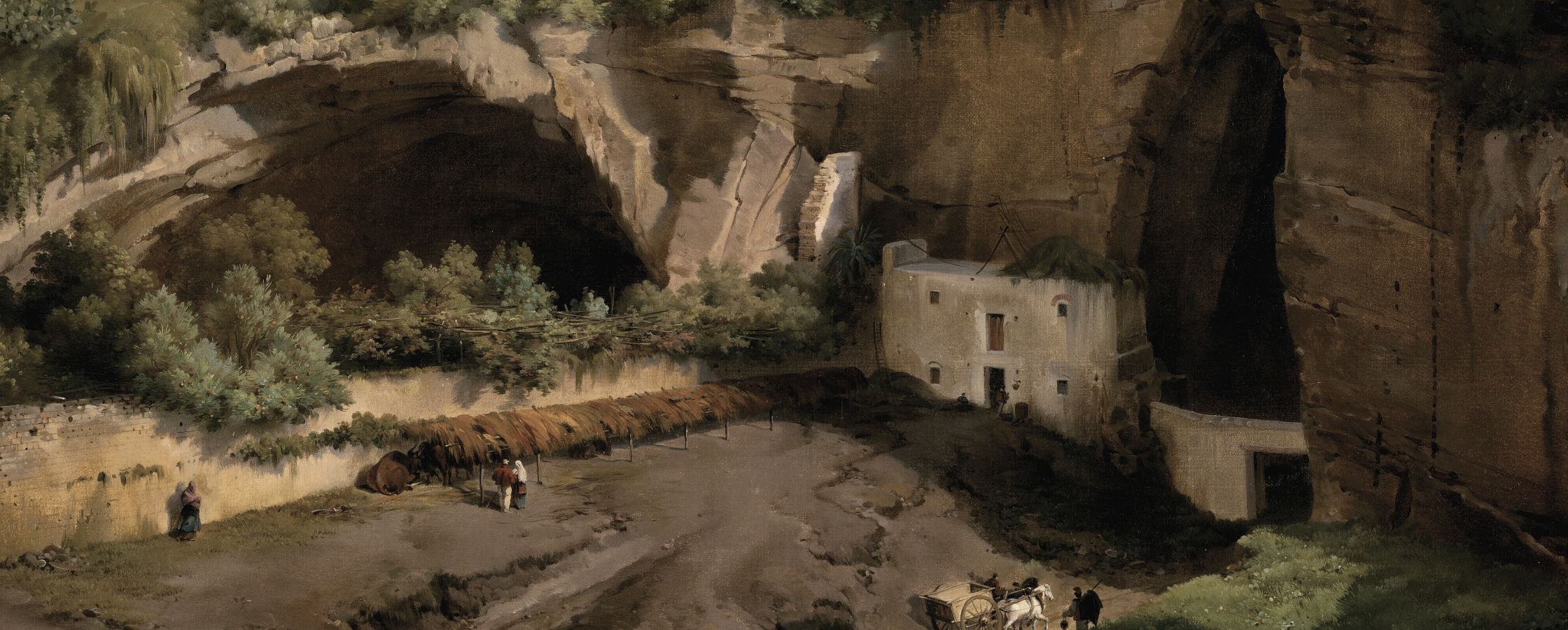
Lancelot-Théodore Turpin de Crissé. View of a Villa, Pizzofalcone, Naples, c. 1819. National Gallery of Art
THE LADY QUEEN: THE NOTORIOUS REIGN OF JOANNA I, QUEEN OF NAPLES, JERUSALEM, AND SICILY BY NANCY GOLDSTONE
In 14th-century Italy, Joanna I of Sicily became the only woman monarch of her time to rule independently, demonstrating remarkable courage. Married for political reasons at age seven to her six-year-old Hungarian cousin, her world was upheaved twelve years later when her husband was brutally murdered. Her powerful in-laws accused her of the crime, forcing her to flee her kingdom and face trial at the papal court in Avignon on March 15, 1348. Her story of overcoming enemies, raising an army, and reclaiming her realm—despite her youth and gender—stands as one of history's most inspiring sagas.
Joanna ruled for an additional thirty years, overcoming war, plague, and treason to establish herself as one of Italy’s most influential leaders. Dedicated to her people's welfare, she lowered crime rates, set up hospitals and churches, supported licensing women physicians, and adeptly navigated the intricate politics of the papacy. Her elegant court grew into a cultural center, drawing notable writers and artists, until the violent, treacherous medieval era brought about her downfall.
I was in a rhythm, finally reading Goldstone's books in the proper order. I learned a great deal about the Kingdom of Sicily and how difficult it was for a female monarch to rule. Not only does a queen have to battle male contenders, presumptuous husbands, and a distrustful citizenry, but she must also contend with the papal state and the directives of the pope. Every day was a struggle for Joanna, even when she found herself windowed. An eligible queen can be the most dangerous scenario.
I enjoyed reading about Joanna's strength and her numerous marital alliances, which seemed only to cause more problems. Lady Queen was an interesting read, but not as captivating as the other Goldstone books I have read. Even so, I rushed through it to move on to the next one.
3.75/5 Stars
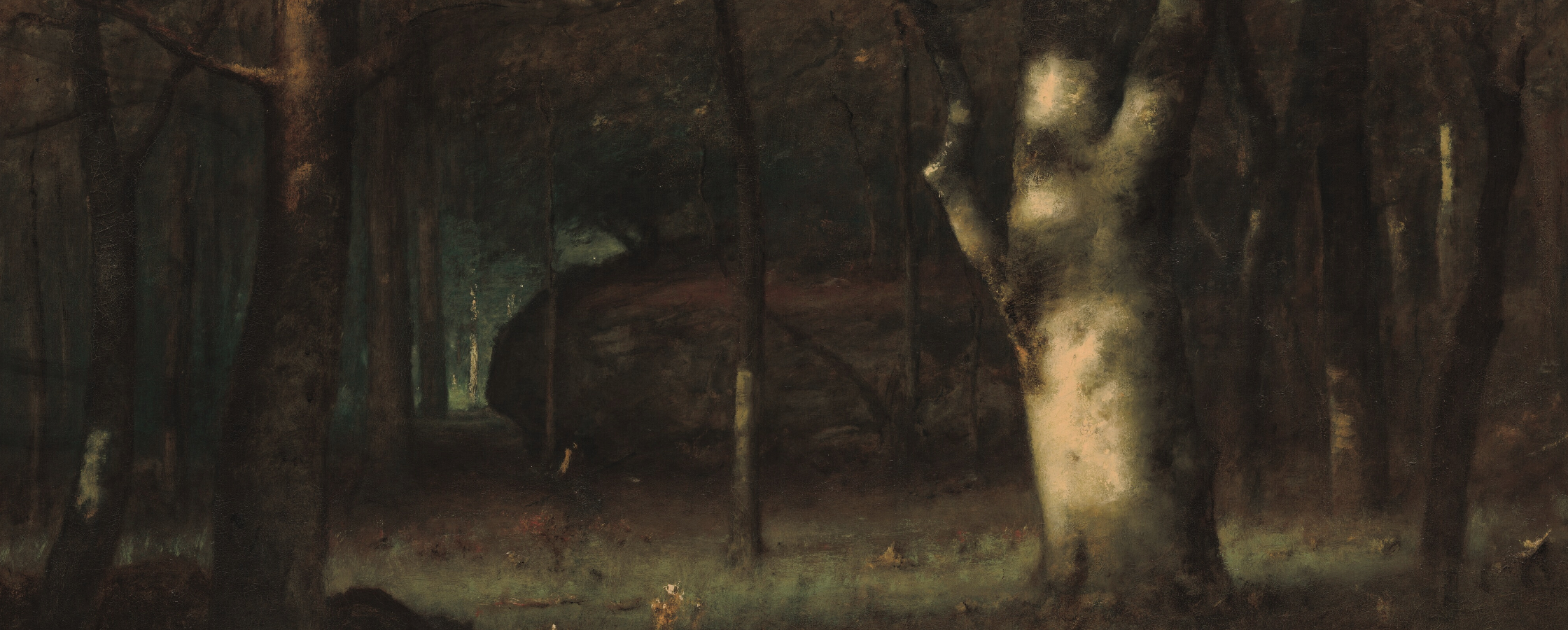
George Inness. Sunset in the Woods, 1891. National Gallery of Art
THE 100 BY KASS MORGAN (AUDIO)
No one has stepped on Earth in centuries — until this moment.
Since a devastating nuclear war, humanity has resided aboard spacecraft well above Earth's radioactive surface. Currently, a group of one hundred juvenile delinquents—deemed disposable by society—is dispatched on a perilous mission: to re-establish a colony on the planet. This could be their second chance at life, or it might turn out to be a suicidal endeavor.
CLARKE was imprisoned on treason charges, yet she remains haunted by her real actions. WELLS, the chancellor's son, journeyed to Earth for his loved one — but will she ever forgive him? Bold BELLAMY forcefully entered the transport pod to rescue his sister, the only sibling pair in existence. Meanwhile, GLASS successfully escaped back onto the ship, only to find that life there is just as dangerous as she had feared on Earth.
Facing a hostile land and haunted by their past secrets, the hundred struggle to survive. They were never intended to be heroes, yet they might become humanity's final hope.
I discovered The 100 ages ago, but when the series became a television show, I leaned into the visual depiction of the story. I watched the first season with excitement and found the plot intriguing, but for some reason, I never continued with the story. Now, years later, I decided to give the books a try. I was surprised to find that listening to the book was fascinating. The bouncing around from character to character was neither unsettling nor creative. I had some difficulty at times to keep up with the proper timeline, whether in the present or while reading a flashback. However, it did not take long for me to realize where I was in the story.
Looking to write my own book with multiple points of view, reading 100 was a helpful exercise in understanding the balance between different characters and how to humanize each person. The background (flashback) and internal thoughts (present) made the story more intriguing. There weren’t any distinctive villains and heroes. The book is a young adult novel after all, so there are plenty of moments when the delinquents who were sent to earth mess up.
What I struggled with were the flashback moments and Glass’s character. I hope she becomes an essential character who significantly affects the story, but having a character back on the spaceship made the story feel a little jolted, going back and forth between those who made it to Earth. It could be that Glass’s character was a little flat. She had her history, but it seemed disjointed with the exciting experiences on the ground as Clark, Wells, and others re-explored Earth.
4/5 Stars