November 2025 Reading List
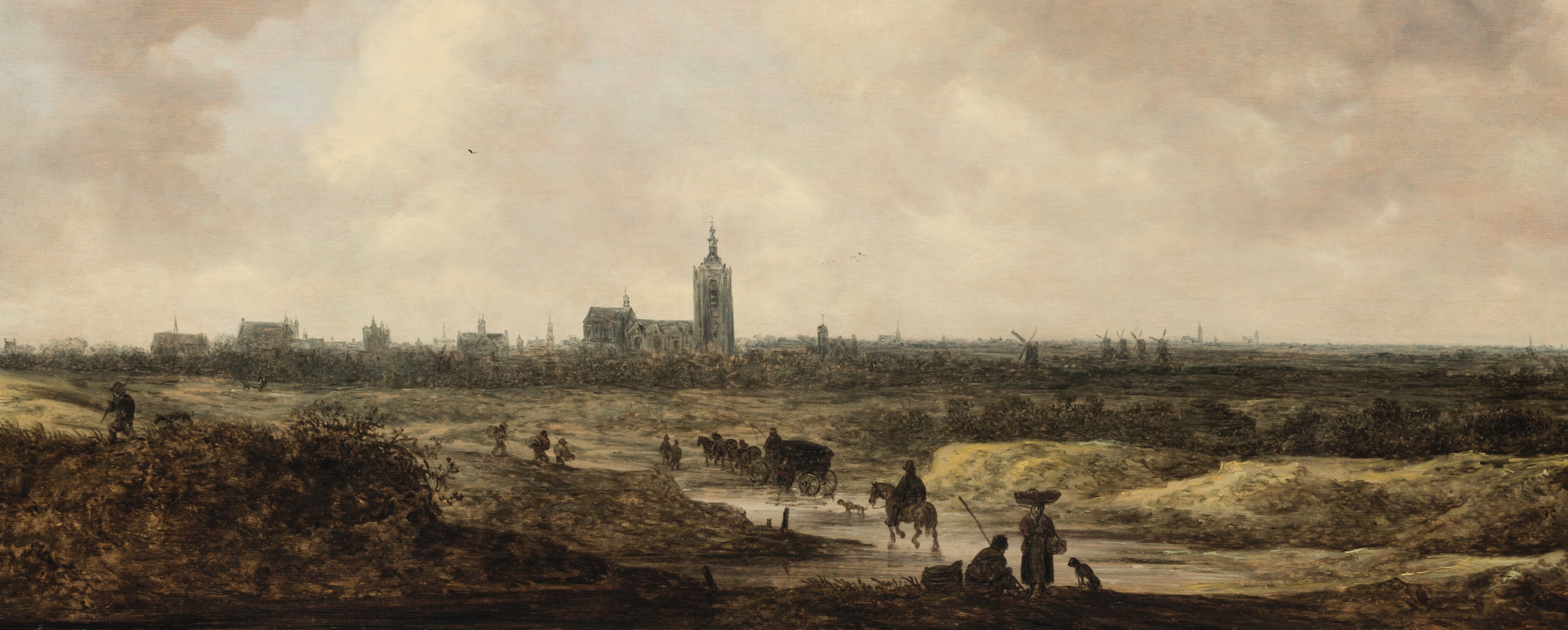
Jan van Goyen. A View of The Hague from the Northwest, 1647. The Metropolitan Museum of Art
DAUGHTERS OF THE WINTER QUEEN: FOUR REMARKABLE SISTERS, THE CROWN OF BOHEMIA, AND THE ENDURING LEGACY OF MARY, QUEEN OF SCOTS BY NANCY GOLDSTONE
After her father rose to the throne of England, Elizabeth Stuart was suddenly relocated from the poverty of unruly Scotland to a life of wealth and splendor. At sixteen, she married a German count of significantly lower status, with the agreement that her father would aid her husband's bid to become king of Bohemia. The betrayal of this promise would condemn her as 'the Winter Queen,” threaten her loved ones, and spark a thirty-year war.
Exiled to Holland, the Winter Queen and her family found refuge there, where Dutch Golden Age art and culture profoundly influenced her daughters. Her eldest, Princess Elizabeth, earned respect as a scholar and was admired by philosopher René Descartes. Louisa, an accomplished painter with a charming personality and striking looks, garnered both praise and controversy. Henrietta Maria, the only sister to marry into royalty, did so at a great personal cost. The youngest, Sophia, with her sharp wit and practical kindness, concealed remarkable inner strength. She continued her great-grandmother Mary’s legacy and played a crucial role in transforming the British monarchy, leaving a lasting legacy that is still evident today.
Another brilliant book in which Goldstone makes women prominent figures in history. Little-known women who have not been given enough credit for their influence or brilliant matchmaking come to life, and I understand more about the history of different countries. What is also remarkable is the lasting legacy of Mary, Queen of Scots. Brutally beheaded because she posed as a challenge to the reign of Queen Elizabeth, it is her line, her blood, that has had a more lasting effect on the English monarchy.
What caught my eye in this Goldstone book was the relationships among the women and the legacy of Mary, Queen of Scots. Mary was a powerful figure despite a life of constant peril and her inevitable reliance on others' decisions. Even so, after what happened between Elizabeth I, the illegitimate child of Henry VIII, and Mary, Queen of Scots and Queen of France, it would be the Stuart line, and not the Tudors, that would continue their reign in England. And from the youngest daughter, Sophia, who married the Elector from Hanover, we get the current royal line of the British Monarchy. It is through the bloodline of women that Mary, Queen of Scots, endures even into the twenty-first century.
I was glad to find the witty footnotes that Goldstone uses so well, back in this book. Those little notes give a modern impression of how much history from centuries ago affects us today. Along with learning about Elizabeth Stuart, granddaughter of the legendary Mary, I gained insight into the bustling parlor rooms and royal court of the Holland. Not yet the free Netherlands; we know today Holland was an epicenter of art, innovation, and academia. It was fascinating to read about the brilliance of Princess Elizabeth and her academic relationship with René Descartes. I found out that my husband was familiar with the Cartesian Method and some other ideas by Descartes, which only reinforced the value of reading history and understanding how the world we live in came to be. Then there was Louisa, the painter, who also possessed a brilliant mind and a ready wit. Both she and her elder sister became nuns. However, Louisa’s conversion from Protestant to Catholicism at a time when whole countries went to war over religion was not the only scandal she had to endure.
I don’t think there was anything about the book I disliked. The pacing was balanced, and Goldstone provided an outstanding balance among the different sisters and their respective histories. As much as I was glad to complete the book, I wanted it to continue. I have held a strong interest in Mary, Queen of Scots, for many years, and so to read a different take on their influence on history was gratifying. All I can say is that I cannot wait to start the next Goldstone book!
Frank Edwin Scott. Portrait de Jeune Homme, n.d. Smithsonian American Art Museum
STONER BY JOHN WILLIAMS (AUDIO)
William Stoner is born in the late 19th century into a poor farming family in Missouri. He begins studying agronomy at the state university, but discovers a passion for English literature, leading him to pursue an academic career away from his difficult childhood. Over his life, Stoner faces numerous disappointments: marrying into a family that keeps him apart from his parents; setbacks in his professional life; his wife and daughter becoming emotionally distant; and a scandalous end to a new affair. As he becomes more introspective, Stoner sinks deeper into a profound sense of loneliness.
Stoner can often be seen on beautiful Instagram feeds depicting a dark academia aesthetic. I read reviews of John Williams's masterful work, which shed light on the world of academia and the complexities of life decisions and relationships. The story began with a distinct image of a young man recognizing his separation from his family and the agricultural occupation that he wishes to leave behind. I found the section about Stoner’s introduction to literature to be a lovely image of someone finding their purpose.
I listened to the book, and the narrator, Robin Field, beautifully captured the pace, the setting, and the slow process of enlightenment in each character. At times, the slowness was distracting. It was painful to listen to the interactions between Stoner and his wife. My heart ached as the relationship between Stoner and his daughter changed. It was excruciating to hear as Stoner's expertise and worth were challenged within the walls of the University. If anyone is looking for a tragic, forlorn, melancholic tale of passive acceptance, then this is the book. The love of literature shines through, as does the need to know oneself and not be bogged down by the insufficiencies of others. I enjoyed the moments of genuine relationship connections, the love of learning, and the few moments of defiance.
There was a constant struggle with the protagonist's passivity. My mind was screaming for Stoner to speak up or challenge the dark forces against him. Perhaps Williams is showing how a passive character can be rooted for, but I found his unquestioning acceptance of incidents and decisions demoralizing and disappointing. As I learn to give the protagonist in my own book strength, Stoner was a good reminder that passivity in a main character is a delicate balance and not always terribly interesting.
Edmund Tarbell. Josephine and Mercie, 1908. National Gallery of Art
LIVING BY FICTION BY ANNIE DILLARD
Dillard examines the works of authors like Nabokov, Barth, Coover, Pynchon, Borges, García Márquez, Beckett, and Calvino, demonstrating how modern fiction operates and why traditional stories still hold significance. Similar to Joyce Cary's "Art and Reality," this book by a writer explores themes inspired by literature itself. Readers familiar with Dillard’s writing will appreciate her lively style, humor, and compelling approach to exploring questions of meaning within experience.
The Writing Life was a powerful book, witty and enlightening for any writer. I struggled with Teaching a Stone to Talk as I had difficulty connecting with Dillard’s personal meditations, although the book was a lovely depiction of interaction with the natural world. With Living By Fiction, I delved into literary criticism and found myself a little lost in the midst of Dillard’s thoughtful analysis.
What struck me most were Dillard's thoughts on what has meaning and where we draw the line between sanity and insanity. She discusses how some individuals are locked away in an asylum because they find meaning in a doodle. Yet we consider it acceptable to count how many times Shakespeare used the word “murder.” Why do we find astronomy sane but astrology insane? Where do we normalize insanity and discount valid eccentricity? There is a difference between what has human meaning and what exists in the natural world.
I was glad to have at least read something by José Luis Borges to gain any sense of Dillard's comments on literature. Even then, I struggled with her commentary and assessment. What I did learn was the importance of literature, especially the works that teach us something, and the value of a healthy diet of books that provide meaning and inspiration.