JANUARY 2025 READING LIST
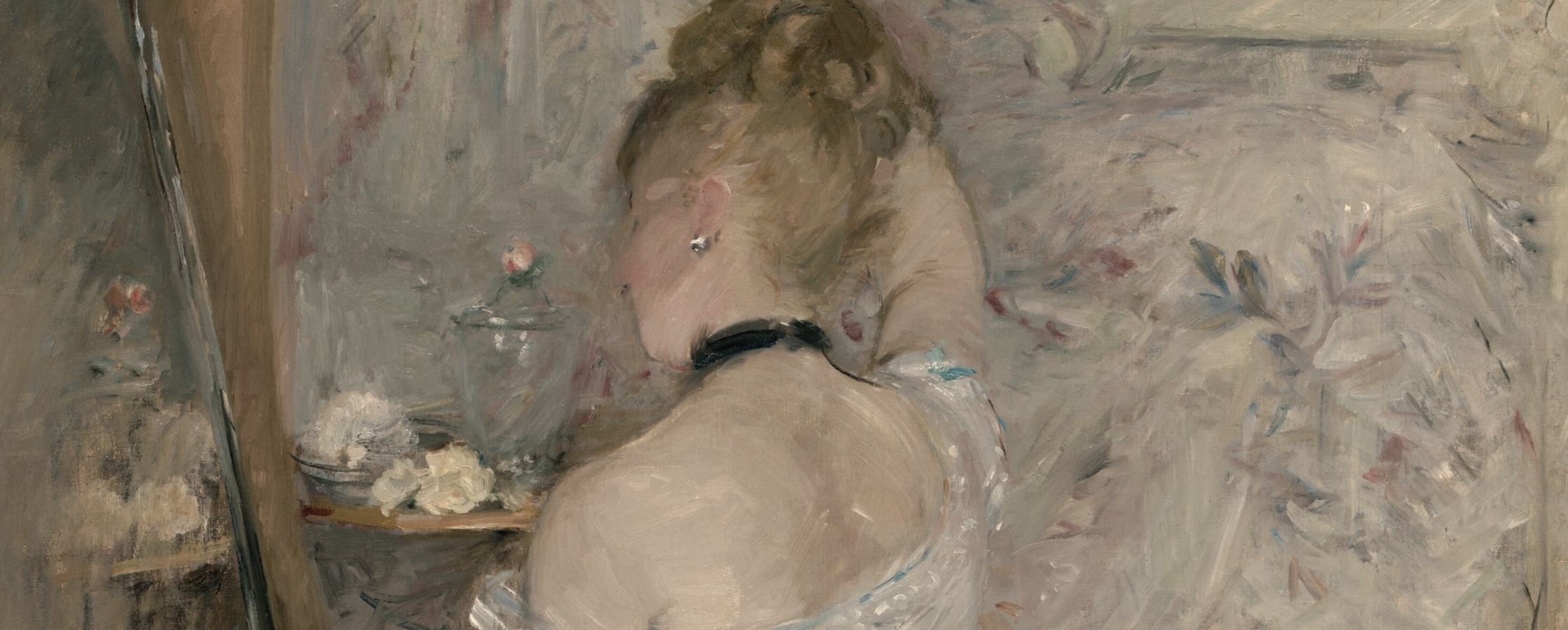
Berthe Morisot. Woman at Her Toilette, 1875–80. The Art Institute of Chicago
THE GRAND SOPHY BY GEORGETTE HEYER
Sir Horace Stanton-Lacy is ordered to South America on business and decides to leave his only daughter, Sophy, with his sister, Lady Ombersley, in Berkeley Square. Sophy arrives to find her relations in a sorry state. She supplies wit and confidence and portrays herself as an astute assessor of all her cousins' problems. She does not expect how her cousin Charles Rivenhall, the Ombersleys' heir, seems to contend with her efforts and appears unappreciative of her involvement.
Published in 1950, the book reads like a lovely Regency novel with the prescribed tension of two people who began the story very much disliking each other, only to find by the end that they are meant for each other. The Grand Sophy is one of Heyer’s more popular books, and I did enjoy the tension between Sophy and Charles as the heir continued to be shocked by Sophy’s brashness. What stands out to me from Heyer’s books is her strong female characters. Save for The Inconvenient Marriage, all of the female protagonists are strong, confident, nonconforming young women who are at odds with traditional society. I will always find joy in reading books with strong female characters.
I still could not love the book, however. The story embodies Emma, portrayed as Sophy, the strong female matchmaker who attempts to resolve people’s problems. Sophy’s character is well-developed, but Charles appears frequently annoyed, maintaining a laissez-faire attitude. He seems to care significantly about Sophy’s actions, yet hesitates to intervene and stop her. I also did not think much of the weak secondary plots, such as that of Sophy’s father's fiancée and Cecilia’s romantic dilemma. However, I found the ending somewhat satisfactory as everything fell neatly into place, though I prefer less predictable stories.
3/5 Stars
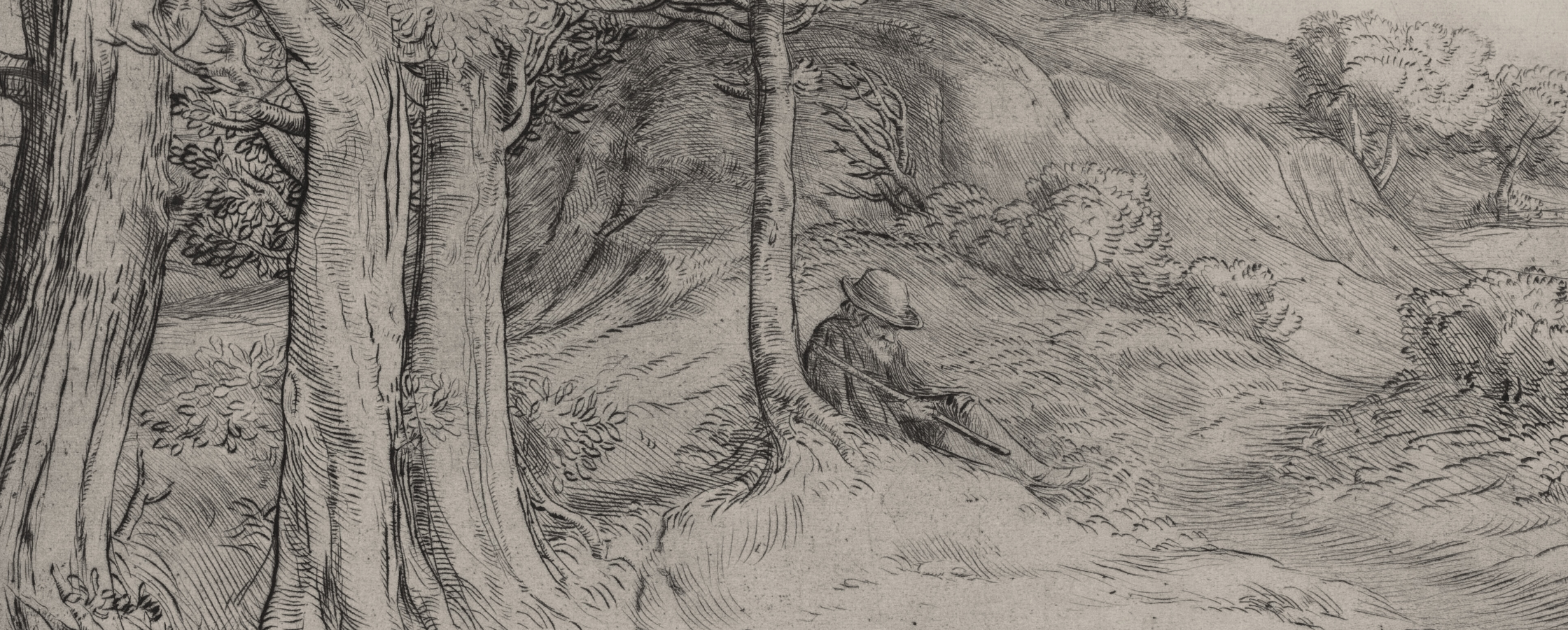
Alphonse Legros. Solitude (Solitude (Paysage)), n.d. National Gallery of Art
ADVENTURES IN SOLITUDE BY DAVID GRAYSON
Written as a literary sketch, Grayson writes of his struggles with pain and depression during a lengthy hospitalization and how he discovers his inner strength in solitude.
Wow! Who knew that a book published in 1931 would have such an impact on me in 2025? At the onset of reading about the isolation of a hospital room, I was swept away by Grayson’s description, personal reflections, and evolving emotions as the words leapt from the pages. Each chapter, headed by a poem and illustration, vividly describes the man’s isolation and loneliness without being sensational or overly dramatic. Each description felt distinct and clear as I moved from page to page, absorbing each moment of the man’s slow steps to recovery.
David Grayson is the pen name for Ray Stannard Baker, one of the handful of brilliant writers who worked at McClure's Magazine. Baker, along with Ida Tarbell, Lincoln Steffens, John S. Phillips, and William Allen White, the muckrakers of their time, exposed unethical practices in corporations and industries. Their work was grueling and lengthy, up against some of the most powerful men in the world. It was not uncommon for one of these incredible writers to take a sabbatical and take some time to rest.
After I read The Bully Pulpit by Doris Kearns Goodwin, I was inspired to seek out the writers at work during the golden age of journalism. My search led me to David Grayson's works, including a collection of country sketches on topics like solitude, friendship, and contentment. I was unsure about the old book; the pages were soft with age, and the edges were brown.
I was so inspired by the reflections on the limits of man and the little joys of hearing birds sing or relishing the slow reading of a good book. So many lines stood out to many. One about language struck a chord in my bilingual heart:
“I have heard people tell of “acquiring a language.” It cannot be done: a language must be lived.”
In addition to the wonderful imagery, personal reflections, and humor, the book was exceptionally well written. It strikes a balance, is informative, and blends tension with emotional depth. It’s a thoroughly enjoyable book that makes me hopeful that the others in the collection will be just as delightful. Here are a few more lines that stood out,
About suffering:
“Tragedy is mental. It is what we think, not what we suffer, that destroys us. It is the disturbance of ordered life, the sense of inadequacy, the conviction of failure that crush the soul.”
About self-confidence:
“I have often wondered how it is that every man loves himself more than all the rest of men but yet sets less value on his own opinion of himself than on the opinion of others.”
There are many more quotes I hope to mull over and imprint on my mind over time. It had been a long time since a book inspired me in so many ways. I was inspired to write more in-depth about the book's impression on me. I was inspired to write my own literary sketch, and I felt a surge of creative energy that made me eager to explore a photography concept. I am brimming with artistic enthusiasm and so thankful I let my literary curiosity discover something new from someone old.
5/5 Stars
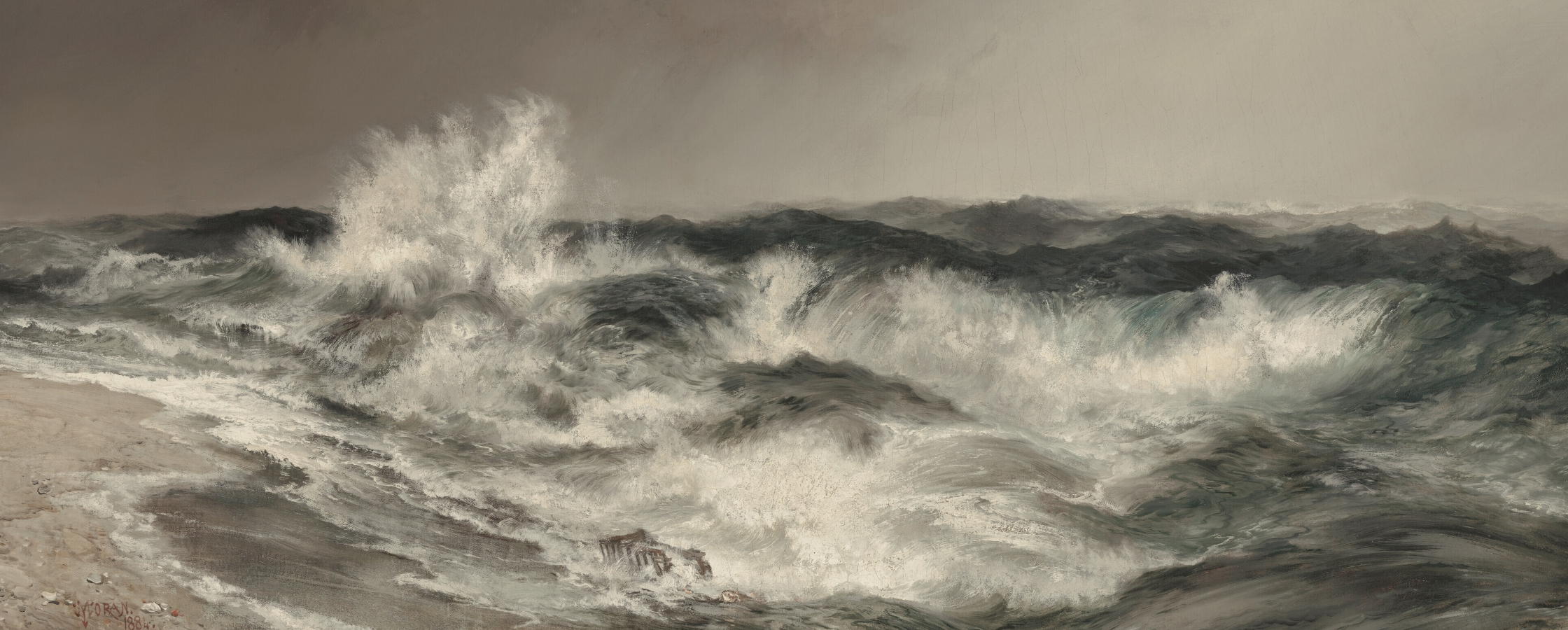
Thomas Moran. The Much Resounding Sea, 1884. National Gallery of Art
A WIZARD OF EARTHSEA BY URSULA K. LE GUIN
In his youth, Ged, also known as Sparrowhawk, will one day be considered the greatest sorcerer in all of Earthsea. Proud and power-hungry, Sparrowhawk meddles with things he does not fully understand and brings a terrible shadow without a name upon the world. This is the first in the Earthsea series where Ged is trained, tested, and challenged in his abilities as he tries to restore the balance.
Ursula K. LeGuin is legendary. I heard her name as one of the best fantasy writers of her time. A friend gave me a book on her writing, and I became intrigued by her legacy and books. Since I also have elementary-age children and like a good fantasy novel, the world of Earthsea would be a good introduction to the LeGuin world.
I liked that the book starts with a map. Every good fantasy book I have read has a map. I also like imagining the archipelago's wonderful world, with its cultural and magical differences across the islands. I also enjoyed the strong female characters introduced in the story: Ged’s aunt and the young woman he meets in the woods. The best parts of the story were the dialogue, which I could read in the interactions between Ged and the other characters. During these interactions, it seemed as though the story's pace quickened, and I found myself flying through the pages.
I struggled with the writing in a couple of areas. The first is the likability of the main character; as I read about Ged, he seemed bright but a little entitled, proud, selfish, and immature. Perhaps that was the intent, but I did not want to root for him, especially as he continued to show his stubbornness and let his pride get the best of him. I will admit that I saw character growth in a few redeemable moments, but I could not get past my dislike for Ged. I am a fan of the humble wizard, akin to Harry Potter or in the show Merlin; both were humble youths and less prone to entitlement and more in search of where they fit in.
The second part of the story that did not work for me was the many paragraphs that flew through descriptions, momentous moments, and character interactions. I wanted more of the story and more elaborate descriptions. The golden rule of writing, “show, don’t tell,” was screaming in my ears as I read through each page. I plan to read more from LeGuin, but I will try something other than the Earthsea series.
2.75/5 Stars