MARCH 2025 READING LIST
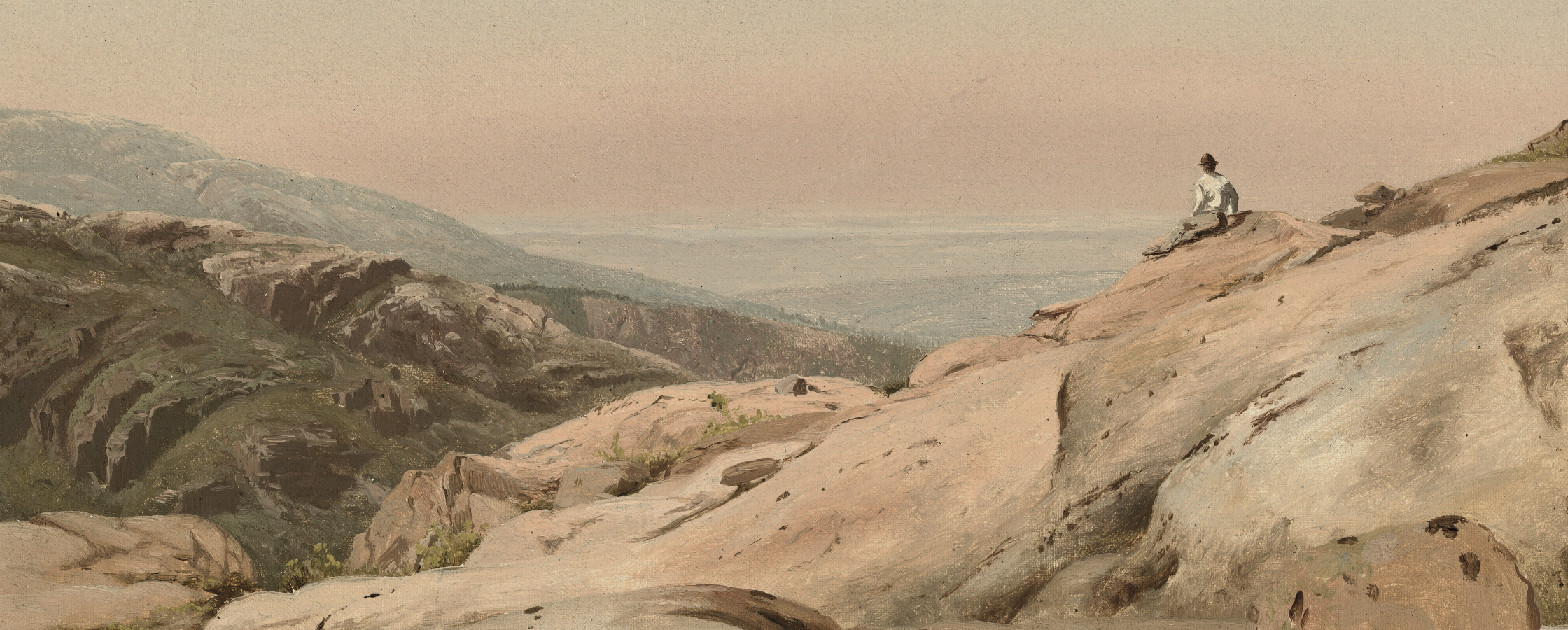
Jervis McEntee. Mount Desert Island, Maine, 1864. National Gallery of Art
THE MARTIAN CHRONICLES BY RAY BRADBURY
The fascinating and unusual story of human explorations on Mars is told through The Martian Chronicles, which details humanity’s repeated attempts to colonize the planet. At first, only a handful of men went there, most of whom fell prey to what they called the Great Loneliness — overwhelmed by the sight of their tiny, shrinking home planet. They felt as if they had never truly existed. The survivors faced rejection on Mars, as the shape-shifting Martians viewed them as lunatics and confined them.
However, more rockets arrived from Earth, breaking through the hallucinations created by the Martians. People still held onto their old prejudices, along with their hopes and fantasies, all touched by corrupted dreams. These ideas were swiftly taken over by mysterious native beings, which had caged flowers and birds made of flame.
It helps that I am a huge Bradbury fan, but I found The Martian Chronicles to be incredibly insightful and compelling as an introspective examination of human behavior. Written in chronological order of those who land and colonize Mars, each story expounds on the behaviors of the conquerors versus the conquered and the myth of Western culture as the bringer of civilization.
I have been fortunate to have traveled to some beautiful places, but what captured my eye was the similarities between how Bradbury described the Martians on Mars and how I would describe Mexicans in Mexico City or Argentinians in Buenos Aires. In both cities, there is an appreciation and sense of respect for nature, not trying to tear down and destroy it by blending nature and urban.
“They quit trying too hard to destroy everything, to humble everything. They blended religion, art, and science because, at the base, science is no more than an investigation of a miracle we can never explain, and art is an interpretation of that miracle. They never let science crush the aesthetic and the beautiful.”
Some sections were eerily familiar in describing the censorship occurring on Earth. It is easy to read between the lines and perceive a foreshadowing of his famous literary work, Fahrenheit 451. What stood out was the State's determination to erase specific voices. The strong effort to silence these accounts was striking. The conclusion also poignantly reflected that those engulfed in fear are often the ones most intent on ridding the world of particular books.
“They began by controlling books of cartoons and then detective books and, of course, films, one way or another, one group or another, political bias, religious prejudice, union pressures; there was always a minority afraid of something, and a great majority afraid of the dark, afraid of the future, afraid of the past, afraid of the present, afraid of themselves and shadows of themselves.”
I greatly appreciated the insight into human behavior and our tendency as a species to destroy rather than build and preserve. Bradbury elaborates on the conflict between art, science, and religion, highlighting how the Martians lovingly blend them together instead of pitting one against the other. The idiosyncrasy of human nature, particularly in nations that insist on equality as their foundation, drives a state of constant division that leads to their destruction rather than any attack from a perceived enemy.
“Science is no more than an investigation of a miracle we can never explain, and art is an interpretation of that miracle.”
5/5 Stars
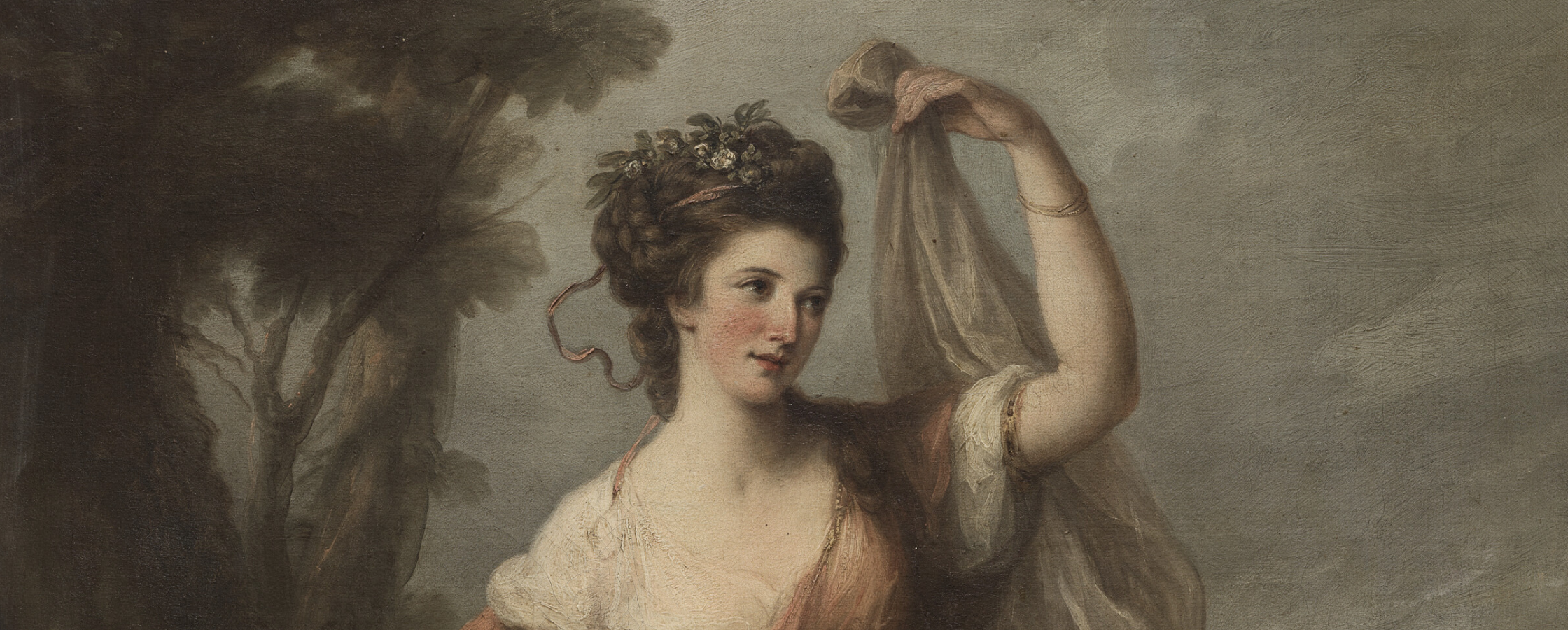
Angelica Kauffmann. A Dancing Young Woman as Terpsichore, c. 1780. The Cleveland Museum of Art
MARY ANNE BY DAPHNE DU MAURIER
In Regency London, Mary Anne Clarke begins her journey in Bowling Inn Alley, escaping poverty by entering the controversial world of pamphleteers. Her charm quickly attracts the Duke of York. Aspiring for wealth and power, she becomes a royal mistress and then aims even higher. Her influential contacts help her establish a profitable business in military commissions, causing a scandal that destabilizes the government and results in her personal disgrace. This story vividly depicts relentless ambition during the Napoleonic Wars and is inspired by du Maurier's great-great-grandmother.
I found Mary Anne at a library sale, and, having read "Rebecca," one of Du Maurier’s famous novels, I decided to try this historical fiction laced with personal ancestry. The key point of the book is that Mary Anne Clark is related to the author, and her scandalous life certainly warrants being put in print. The beginning of Du Maurier’s tale reveals how Mary Anne finds a way to survive in the unforgiving world of patriarchy. Gender, social class, and power are constant themes as Mary Anne, who is sharp and ambitious, goes toe-to-toe with a young architect, business owners, and the gentry of 19th-century London.
The story was compelling in its portrayal of the absurdity of the aristocracy and the vast sums of money they spent. I was frustrated by the Duke of York’s expenditures and how all the responsibility fell on his mistress rather than on his wife. It was also disheartening to read about the ways men could entice women into relationships without accountability or validity on their own part.
The part that lost me a little was the trials in which men purchased their preferments from Mary Anne, who would then influence the Duke of York to enlist them in the military after the Napoleonic Wars. This bribery predominantly falls on Mary Anne, who is blamed more than the man in charge. Du Maurier effectively addresses the themes of social hypocrisy and gender inequality, but the narrative suffers from her commitment to historical accuracy and detail in recounting the trials. I confess I skimmed through many of the proceedings, capturing only a line or two. Suffice it to say, Mary Anne remains composed while the men become easily flustered, further illustrating the inaccuracies in gender stereotypes. If the story had focused more on the behind-the-scenes behaviors of those on trial, I believe I would have been more captivated by the narrative. Even so, it was an interesting read and certainly felt personal from Du Maurier. How often does a writer get the opportunity to write about their own family history with such interest?
3.25/5 Stars
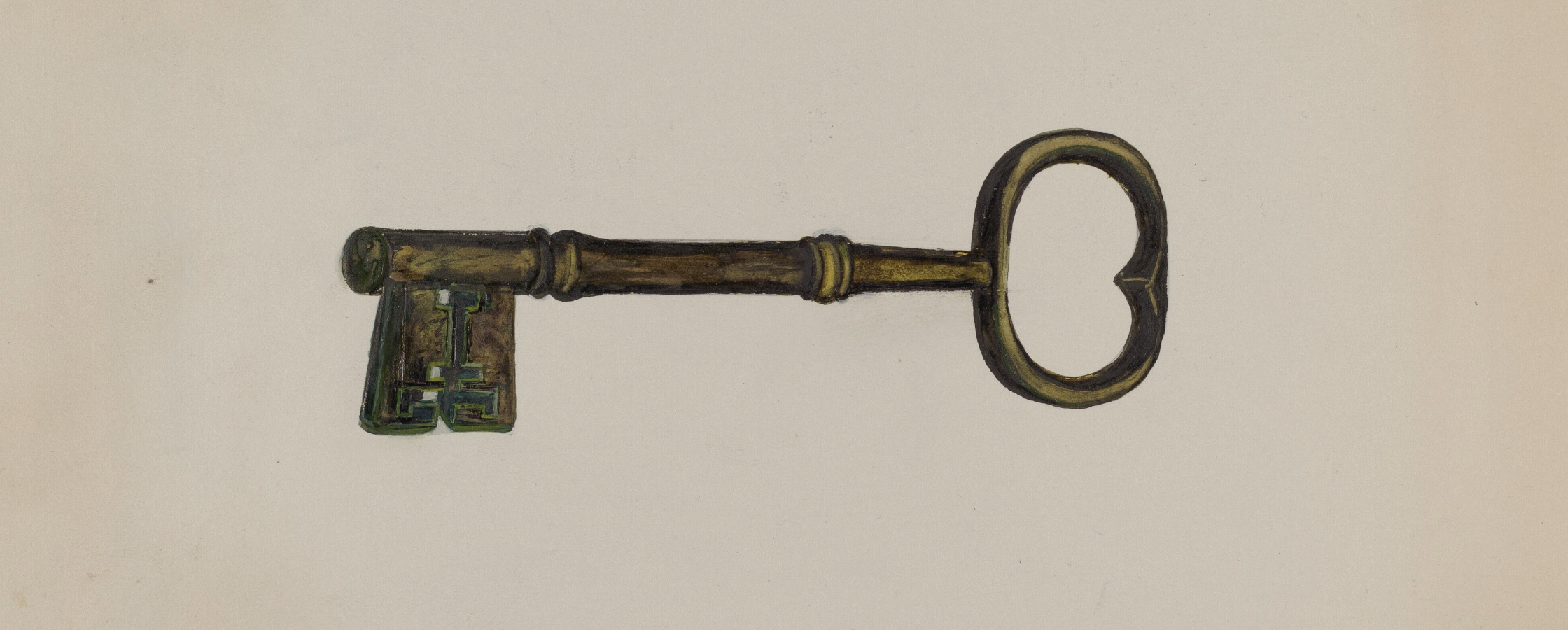
Edna C. Rex. Key, 1935/1942. National Gallery of Art
THE DEAD SECRET BY WILKIE COLLINS
A gothic mystery where Sarah Leeson, who, on her deathbed, confesses that heiress Rosamond Treverton is her illegitimate child rather than the legitimate heir. After marrying, Rosamond goes back to Porthgenna Tower, discovers this secret, and faces the repercussions for her inheritance.
I liked The Dead Secret more than I thought I would. I listened to this book to have something calming yet robust in vocabulary and language. Collins is wonderful with language, almost to the level of Brontë. I read enough of the synopsis to understand that Sarah Neeson, a maid in the house of the Trevertons, a well-to-do family in Cornwall, is not just a maid. Her life is deeply intertwined with the Treverton family, but it takes many years for the secret, purposefully buried, to be unearthed.
Although I enjoyed listening to The Dead Secret, I also struggled with its pacing. It moved incredibly slowly, allowing each character's thoughts and feelings to be shared. It was a slow procession to the end, but the redeeming quality of the book is the heartfelt responses from each character, which fit their personalities so well. It is a rare occasion where several of the characters do not change much over the length of the story, but their consistency makes the story better.
3.5/5 Stars