Power and Thrones Review
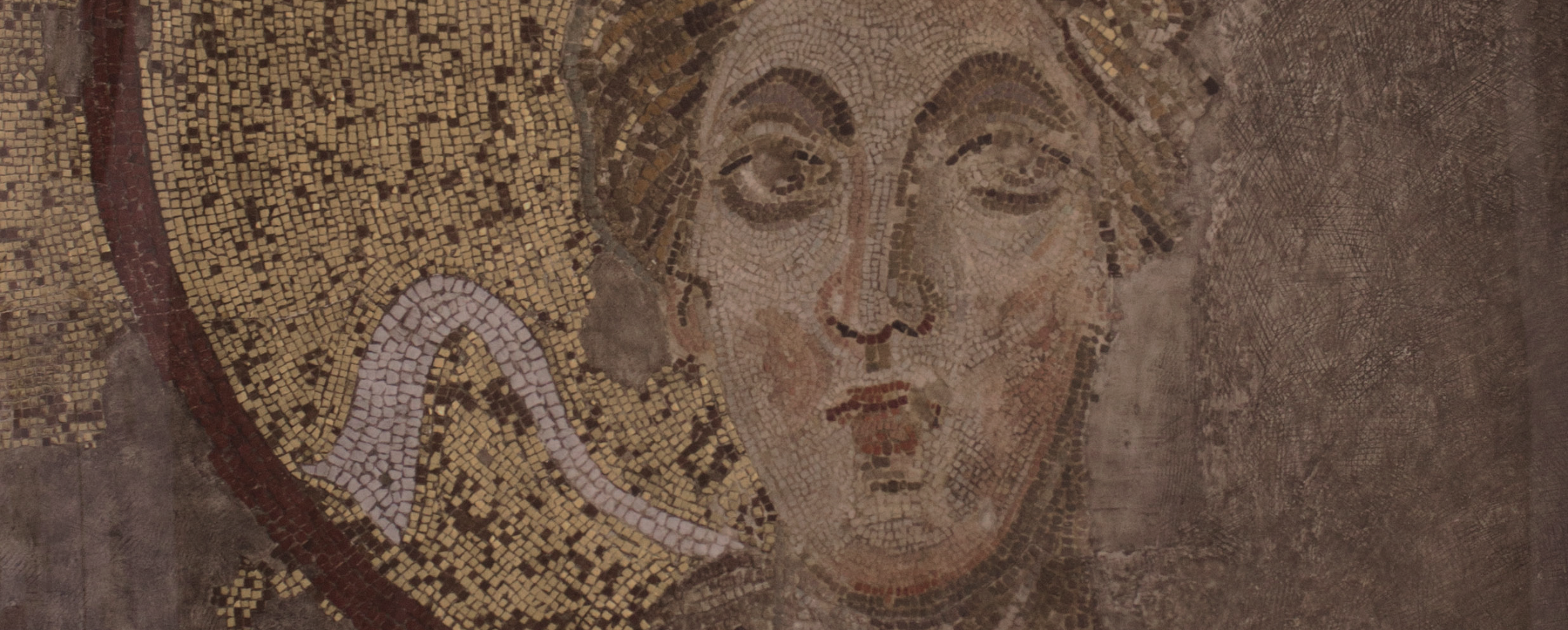
Culture: Byzantine. Archangel Gabriel, early 20th century (original dated 9th century). The Metropolitan Museum of Art
POWER AND THRONES: A NEW HISTORY OF THE MIDDLE AGES
BY DAN JONES
Summary:
The sacking of Rome by barbarians in 410, which left the city in ruins, marked the end of an era and the start of a millennium of profound change. The Middle Ages come alive through stories of notable figures such as St. Augustine, Attila the Hun, the Prophet Muhammad, and Eleanor of Aquitaine. Readers are led through the rise of the great capitals of late Antiquity and the influential cities of the Islamic West. Migration and wars ultimately led to the first contact between the old and new worlds in the sixteenth century.
The medieval period was marked by significant forces that still influence us today: climate change, pandemics, mass migration, and technological progress. It witnessed the rise of major European nations, the development of Western legal and governmental frameworks, and the emergence of Christian Churches as powerful moral authorities. This era also saw radical transformations in art, architecture, philosophy, and scientific discoveries.
The Western world, born from the remnants of an empire, started to take form. It arose through crises and collapses to become a leading global power. Over a thousand years, and with the ever-shifting heights of power, all facets of human life and activity were transformed.
Why this book?
After finishing all the books by Nancy Goldstone, a brilliant non-fiction writer, I was looking for more non-fiction books with a similar narrative and humorous style. I had Dan Jones’s book Henry V on my to-read shelf for a while, and when I saw it at my local library, I thought I would give the author a try. It was good. Jones writes in the narrative non-fiction style I was looking for, and he uses informative footnotes like Goldstone that I really like. When I returned to Henry V, I wanted to try another book by Jones. Power and Thrones happened to be available.
Expectations?
I expected to read a book that gave a brief glimpse into the past, something I could wash over and get a general idea of history. I thought it would be a lovely read before bed, something I could take my time with. What I found was not just a glimpse at different powers and empires, but a recognition of a pattern. Great powers rise, but inevitably fall due to pestilence and disease, greed, war, revolt, or becoming leaderless. Before I knew, I was hiding out in my room reading, devouring years of history, and neglecting my chores at home. The book that I was supposed to read slowly, I finished in three weeks. I enjoyed the book so much I already want to read it again.
What stood out?
The book begins with an explanation of why the Roman Empire was so strong, and surprisingly, it wasn’t the military but the good fortune of favorable weather for over four hundred years. The real start to the book begins with the fall of the great empire because of, get this, a twenty-year drought in the Asian Steppe, which drove the Huns west, and the barbarians across the Danube and into the heart of Rome.
The term power is not limited to civilization or culture. Instead, Jones focuses on who held power over people (commoners, nobility, and royalty) and on politics (kingdoms, nations, and the papacy). There was the Greco-Roman empire of the Byzantines, but powerful forces like monks, knights, merchants, scholars, and navigators also proved extremely influential.
Several sections were written from individual perspectives, clearly illustrating how different powers operated. Attila the Hun, Charlemagne, El Cid, and Martin Luther are examples of offering perspective through the lives and experiences of specific people. Instead of being overwhelmed by names and dates, Jones guides the reader through the life of a single person, offering a more personal perspective on the period.
Each part features a theme—Imperium, Dominion, Rebirth, and Revolution—while each chapter zeroes in on a specific power group or empire. Although the chapters provide valuable insights, they might not suffice for those wishing to delve deeper into a particular power. To assist with further exploration, I’ve compiled a reading list for each power mentioned in Jones’ book, available on my Resource page.
Power and Thrones Further Reading
What was gained?
Even though Powers and Thrones focuses on the Middle Ages (roughly 400-1530 BC), it is easy to recognize the influence and connection of those in power from a thousand years ago to today. The ebb and flow of power shifting between people and civilizations is part of the normal rhythm of life. Given people's anxiety in the present, this book was a good reminder that no power or regime is invincible or beyond reproach. There is also a season for different types of government. Constitutional Monarchies were popular for a time, and we live in the age of democracy, but we may see that trend shift in the future.
Because I only had a glimpse of who was in power, I found myself eager to learn more about the influence of each. I have been watchful in my other readings to recognize the period's influence. In finishing The Plantagenets (also by Dan Jones), I could see the power and influence of knights and the crusades. In reading about Toledo, Spain, in The Ornament of the World, I learned about the tolerance of the monotheistic faiths there and recalled the power of the Arabs around the Mediterranean, who provided a renaissance of learning and discovery.
Connection to the present?
What stood out was the pattern of inevitable fall for any world power or empire. People are often fascinated with the Romans because their empire lasted a long time. It also evolved into the Byzantine Empire, although with a Greco influence. But like all empires, even Pax Romana ended, just as all that came before and after have fallen. Think of the Egyptians, Ottomans, Austro-Hungarians, Prussians, Russians, and many more. All have fallen, which means the United States is not immune to decline or even collapse. Whether that is a terrifying, comforting, or humble thought, the pattern of power in world history means that no nation or empire is the world's leader forever.
If you have read Power and Thrones, what stood out to you? Did you find the glimpse of each time period sufficient, or did you want to learn more? What ideas or philosophies of the Middle Ages do you think are still relevant today?