SEPTEMBER 2023 READING LIST
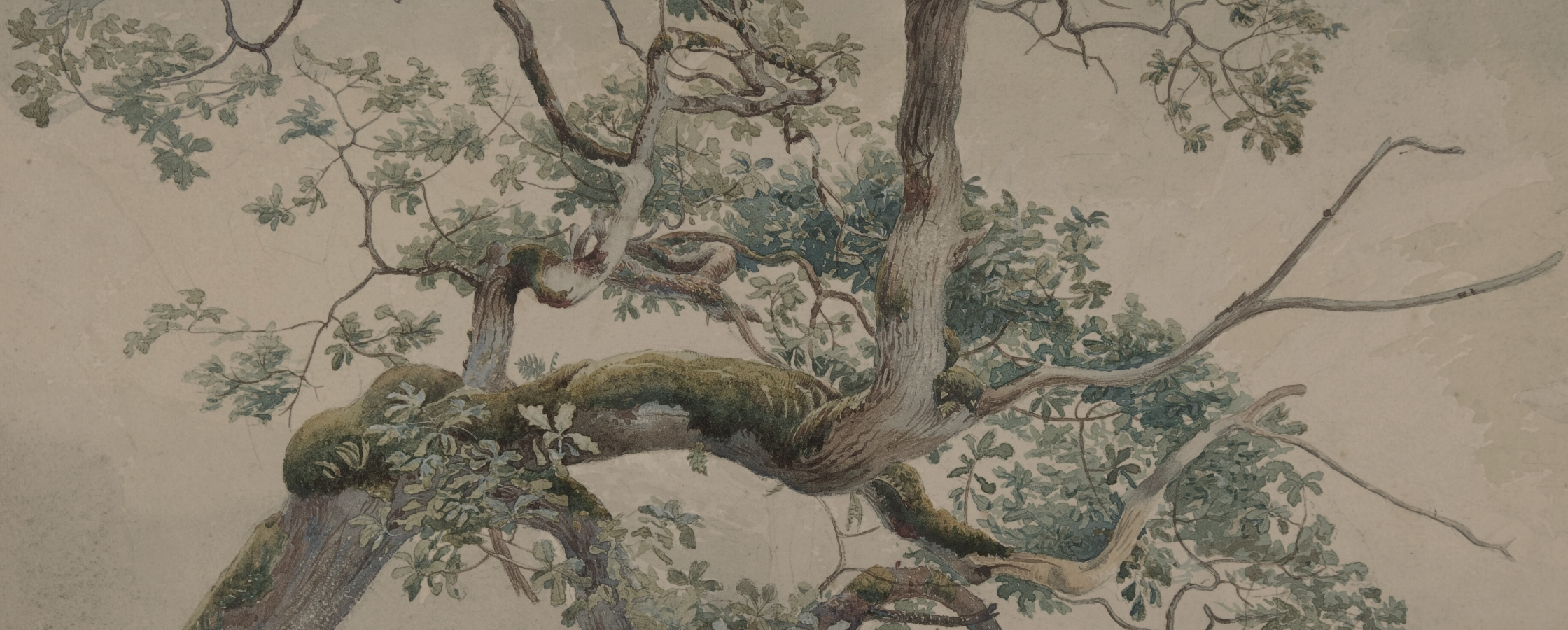
Charles Reginald Aston. Tree Branches, 1860–1900. The Metropolitan Museum of Art
THE SIGNATURE OF ALL THINGS BY ELIZABETH GILBERT
Spanning much of the eighteenth and nineteenth centuries, the novel follows the fortunes of the extraordinary Whittaker family as led by the enterprising Henry Whittaker—a poor-born Englishman who makes a great fortune in the South American quinine trade, eventually becoming the richest man in Philadelphia. Born in 1800, Henry's brilliant daughter, Alma (who inherits both her father's money and his mind), ultimately becomes a botanist of considerable gifts herself. As Alma's research takes her deeper into the mysteries of evolution, she falls in love with a man named Ambrose Pike who makes incomparable paintings of orchids and who draws her in the exact opposite direction — into the realm of the spiritual, the divine, and the magical. Alma is a clear-minded scientist; Ambrose a utopian artist — but what unites this unlikely couple is a desperate need to understand the workings of this world and the mechanisms behind all life.
I found this book at a Friends of the Library bookstore at my home library and I was immediately captivated but the cover and the botanical imagery. I recently tried to read Eat, Pray, Love, but I just wasn't in the mood for a memoir. This book was promising: it featured a female protagonist set in the 19th century, with botany as its subject. I was immediately drawn into Gilbert’s wonderful way of writing, and I was captivated by the story of Henry Whitaker. Then the story reached Alma, his daughter, and it slowed considerably and seemed far less interesting.
Some of the pacing could be related to Alma’s fascination and work around the study of moss, but I felt like her story never took off, or at least not in the way that I had hoped it would go. The story begins to turn into a young woman’s sexual awakening in her youth and finishes with the sexual consummation she so desperately longed for.
When I signed up for a 19th-century novel, I was not prepared to have so many sexual thoughts and encounters be so prevalent. Although I understand that much of this sensual experience was done in isolation and attempts with her husband, it still was not what I expected, and therefore, I was a little disappointed. In the end, I wished there were a story about the great voyages of Henry Whitaker with the famous Captain Cook, which meant that most of the book was a bit of a letdown.
What I learned from this book is that it is not a given that someone writing about a certain period or era will stick to that period's customs and language.
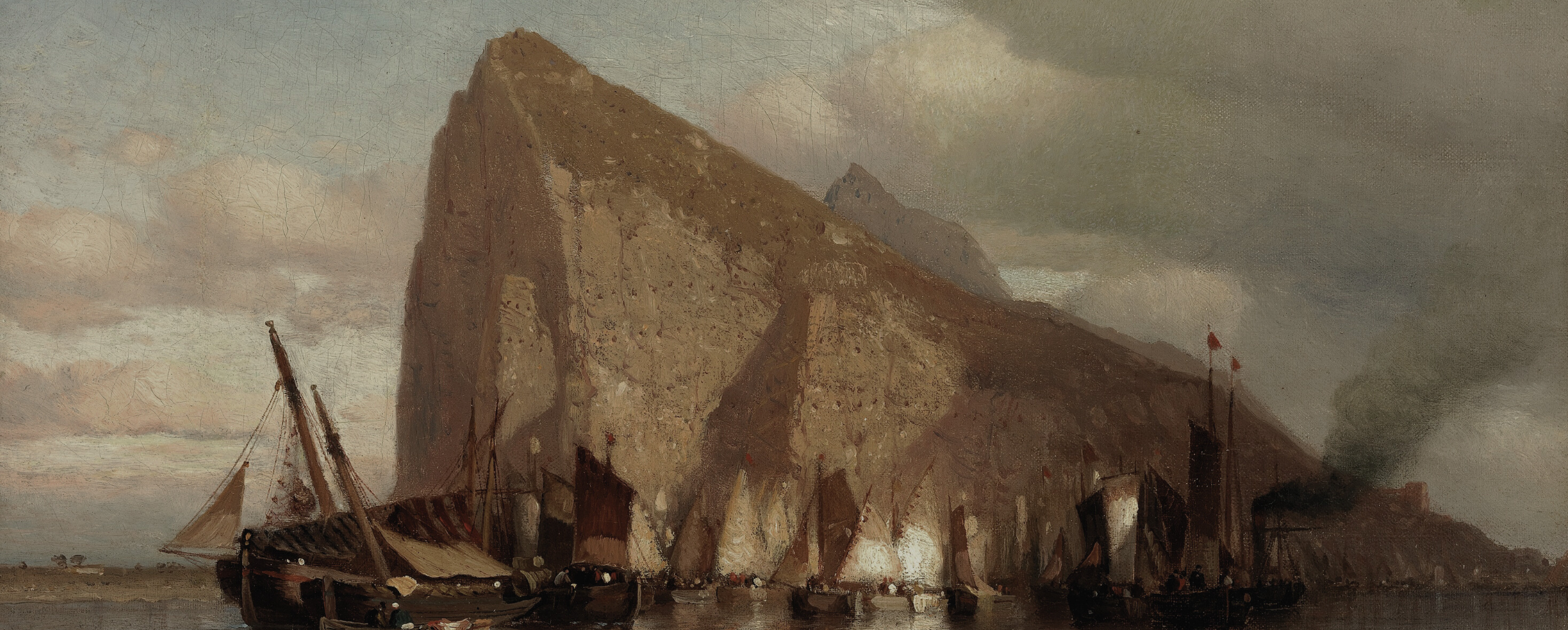
Samuel Colman. Clearing Storm at Gibraltar, ca. 1860. Smithsonian American Art Museum
A DANGEROUS PLACE BY JACQUELINE WINSPEAR
Spring 1937. In the four years since she left England, Maisie Dobbs has experienced love, contentment, stability—and the deepest tragedy a woman can endure. But her sojourn in the hills of Darjeeling is cut short when her stepmother summons her home to England; her aging father, Frankie Dobbs, is not getting any younger. But on a ship bound for England, Maisie realizes she isn’t ready to return. Against the wishes of the captain, who warns her, “You will be alone in a most dangerous place,” she disembarks in Gibraltar. Though she is on her own, Maisie is far from alone: the British garrison town is teeming with refugees fleeing a brutal civil war across the border in Spain.
Under the suspicious eye of a British agent, Maisie is pulled deeper into political intrigue on “the Rock”—arguably Britain’s most important strategic territory—and renews an uneasy acquaintance in the process. At a crossroads between her past and her future, Maisie must choose a direction, knowing that England is, for her, an equally dangerous place, but in quite a different way.
A Dangerous Place is number eleven in the Maisie Dobbs series, and with this book, Winspear finally gave Maisie a little more spirit. Although she suffers a terrible loss, she seems more human as I read this book. She suffers from depression and even picks up smoking. The book was also satisfying in its treatment of Spanish history, as I enjoyed learning more about the Iberian Peninsula and the tensions leading up to the Second World War.
Living in a post-WWII era, it is hard to imagine what it must have been like in Europe in the 1930s. This book begins to show the different reactions, both for and against the new idea of fascism, and the buildup to what will become a full-on war.
Another reason I liked this book was that, with the main character abroad, there were plenty of new characters to read about, and a completely different setting gave the series new life. The book continues to include occasional story and character recaps, which I am not fond of, but they’re not long sections, and at this point, I am used to the author's predilection for backstory repetition.
What I learned from this book was how many factors contributed to WWII, and that the civil war in Spain was a sort of preview of modern instruments of warfare at the time.
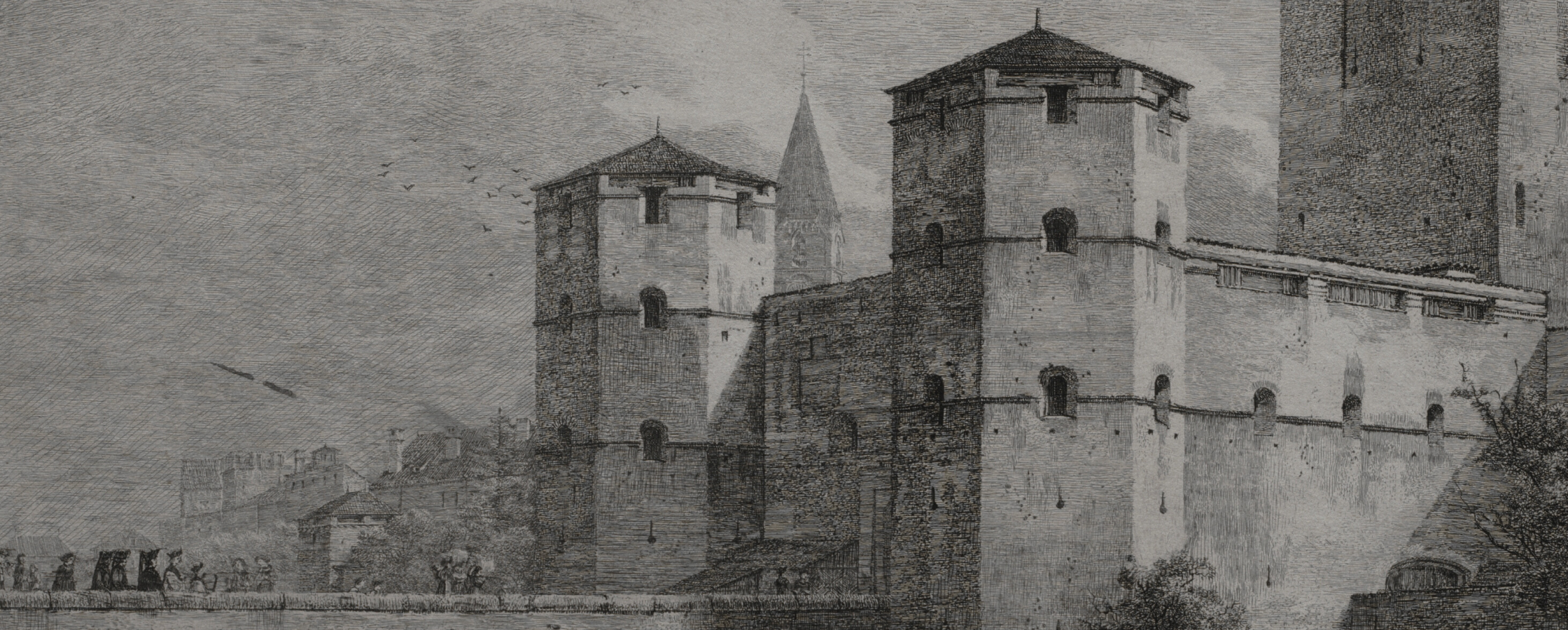
Domenico Quaglio. Munich-Hohenschwangau, Bavaria, Germany, 19th century. The Cleveland Museum of Art
A JOURNEY TO MUNICH BY JACQUELINE WINSPEAR
It’s early 1938, and Maisie Dobbs is back in England. On a fine yet chilly morning, as she walks towards Fitzroy Square—a place of many memories—she is intercepted by Brian Huntley and Robert MacFarlane of the Secret Service. Traveling into the heart of Nazi Germany, Maisie encounters unexpected dangers—and finds herself questioning whether it’s time to return to the work she loved. But the Secret Service may have other ideas. . . .
In A Journey To Munich, Maisie is sent undercover to recover an important English citizen who is being held a prison of the Third Reich. Maisie pretends to be the man’s daughter and as she journeys through Munich, Maisie has an unsettled feeling as to the fascist movement happening in Germany. She has to navigate the Schutzstaffel and the military regime while The Führer was planning his occupation of Austria in the Anschluss.
Maisie is forced to face someone who has brought her much pain in her past and has to find a way to trust her and the American agent who is determined to stay at the embassy until called. Still, Maisie warns him that the terror felt around the city is only going to get worse. Rebels, ordinary citizens, and the Protection Squadron are all waiting with anticipation as to what their leader will do, and Maisie must pretend submission to become a prisoner herself.
The world Windspear creates in this book is both powerful and terrifying. It is the subtle nature of everyday life and the fear that the characters convey that made this a heavy read for me.
We have the benefit of hindsight when looking back on 1940s Germany, but reading this book was both wonderful and terrifying to imagine life in the lead-up to WWII and what life must have been like for ordinary citizens. Winspear builds the tension that must have been brewing and the flourishing of men, who in themselves may not have been evil, but because of degradation following the First World War, have found themselves free to their evil devices.
“But then there are people in another league, if you will, people who are capable of so much more, who harbor an evil so deep it scars all our souls. That kind of darkness can lie dormant, as if in a barren desert, but then .... but then circumstances change to allow their evil to become truly, truly terrible, a boiling storm that encompasses all in its wake.”
The only negative I could speak to is the use of the swastika on the cover. That symbol can be a trigger for some people, and I admit that, besides the great story, part of the reason I read the book so quickly was that I did not want the symbol glaring at me from my nightstand. Otherwise, I found A Journey To Munich to be the best book in the series so far.
Footnote: The author shares her inspiration for the book to be based on a true story that was shared with her by her mother, who had met a man who had been in a prisoner camp in Germany in the 1930’s. This inspiration with a basis in the truth gave the book an even richer and more terrifying reality.
James McNeill Whistler. Nocturne: Blue and Gold—Southampton Water, 1872. The Art Institute of Chicago
IN THIS GRAVE HOUR BY JACQUELINE WINSPEAR
Sunday, September 3rd, 1939. At the moment Prime Minister Neville Chamberlain broadcasts to the nation Britain’s declaration of war with Germany, a senior Secret Service agent breaks into Maisie Dobbs' flat to await her return. Dr. Francesca Thomas has an urgent assignment for Maisie: to find the killer of a man who escaped occupied Belgium as a boy, some twenty-three years earlier, during the Great War.
In a London shadowed by barrage balloons, bomb shelters, and the threat of invasion, within days, another former Belgian refugee is found murdered. And as Maisie delves deeper into the killings of the dispossessed from the “last war," a new kind of refugee.
The book begins with Chamberlain’s address to the people of England, of an actual declaration of war, and the chilled atmosphere as the country prepares for a possible invasion. The focus is on remnants that happened in WWI, but World War Two is very much prevalent and present in the story. The atmosphere in the book was eerie as people continued to go about their lives, even with gas masks flung over their shoulders and the clutter of barrage balloons in the sky.
The main essence of the story is the mystery of the death of a Belgian man, one who had survived WWI, and the systematic elimination of other Belgians as the story unfolds. Besides the book's essential mystery, there was also an intriguing storyline about a girl without a place to go, which begins with Maisie and her people, and the continued anticipation of the Partridge family of boys and the inevitability of their entanglement in a new war.
I did enjoy this book, and the complex mystery behind the deaths of former Belgian refugees was an interesting puzzle. I particularly liked the ending of the story, when Maisie did her accounting and revisited the places related to the case. The closure and peace that came for both her and one of the victims were very touching and a welcome reprieve from the storylines surrounding this book.
Even though I enjoyed the book, I am having a hard time recalling a specific line or section that stood out to me. The story flowed well, and the mystery was thought-provoking; yet when I think back on this book, it takes a little longer to conjure a specific memory. Also, I am a bit weary of the constant recapping of previous stories. This book, in particular, with its reference to the previous war, was ripe for opportunity for recapping, and I felt the repetitive information was a bit on the heavier side.
Footnote: I gave a great deal of thought as to how serious a threat Germany's invasion of the UK was to the populace. The fear of anticipation must have been great, and is something that here in the US is hard to fathom the extent of that fear, as we have not had a threat of invasion before, at least not yet.
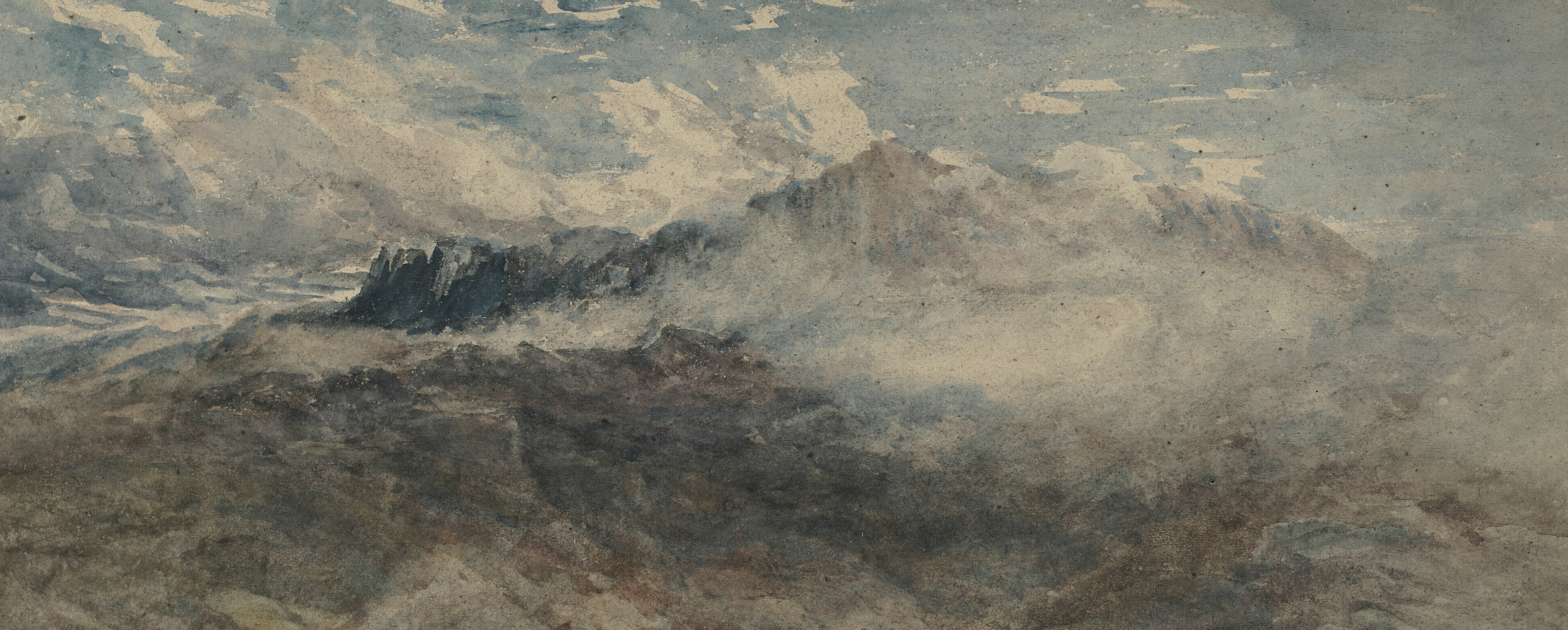
David Cox. Mountain Heights, Cader Idris, c. 1850. National Gallery of Art
THE RECKONING BY SHARON KAY PENMAN
Here, alive from the pages of history, is the compelling tale of a Celtic society ruled by Llewelyn, Prince of Wales, on a collision course with a feudal realm of Edward I. With this last book in the extraordinary trilogy that began with HERE BE DRAGONS and continued in FALLS THE SHADOW, Sharon Kay Penman has written a beautiful and moving conclusion to her medieval saga. For anyone who has read the earlier books in this incomparable series or ever wanted to experience the rich tapestry of British history and lore, this bold and romantic adventure is a must-read. - Goodreads
What a wonderful finish to a series! I grew to enjoy Penman’s writing, and although I did not care for the super intimate moments that felt a bit dragged out, I could sense the research and history as I absorbed each page. I had no real knowledge of Wales or its history before reading this series, and I was transported eight hundred years back in time to the life of Llywelyn ab Iorwerth, better known as Llywelyn the Great.
In The Reckoning, the grandson of Llywelyn ab Iorwerth, Llywelyn ap Gruffudd, is the focus of the story, and his attempt to rid Wales of the encroaching English crown under Edward I. Much has happened already. The Kingdom of England is still reeling after the life and death of Simon de Monfort. The majority of the book is about the battles between the two men, one to hold on to his land and the other to conquer the whole of the British Isles. These books are long and take a little bit to get started, but once into the story, it is hard to put down.
What I learned from this book and the series as a whole was a deep understanding and love for the history of Wales. The language has a beauty to it (this could also be because I associate it with Tolkien’s elvish language), the descriptions of the land make me want to visit, and I enjoyed reading about the bravery of the Welsh and their more liberal traditions regarding women compared with those of their English counterparts.