JANUARY 2024 READING LIST
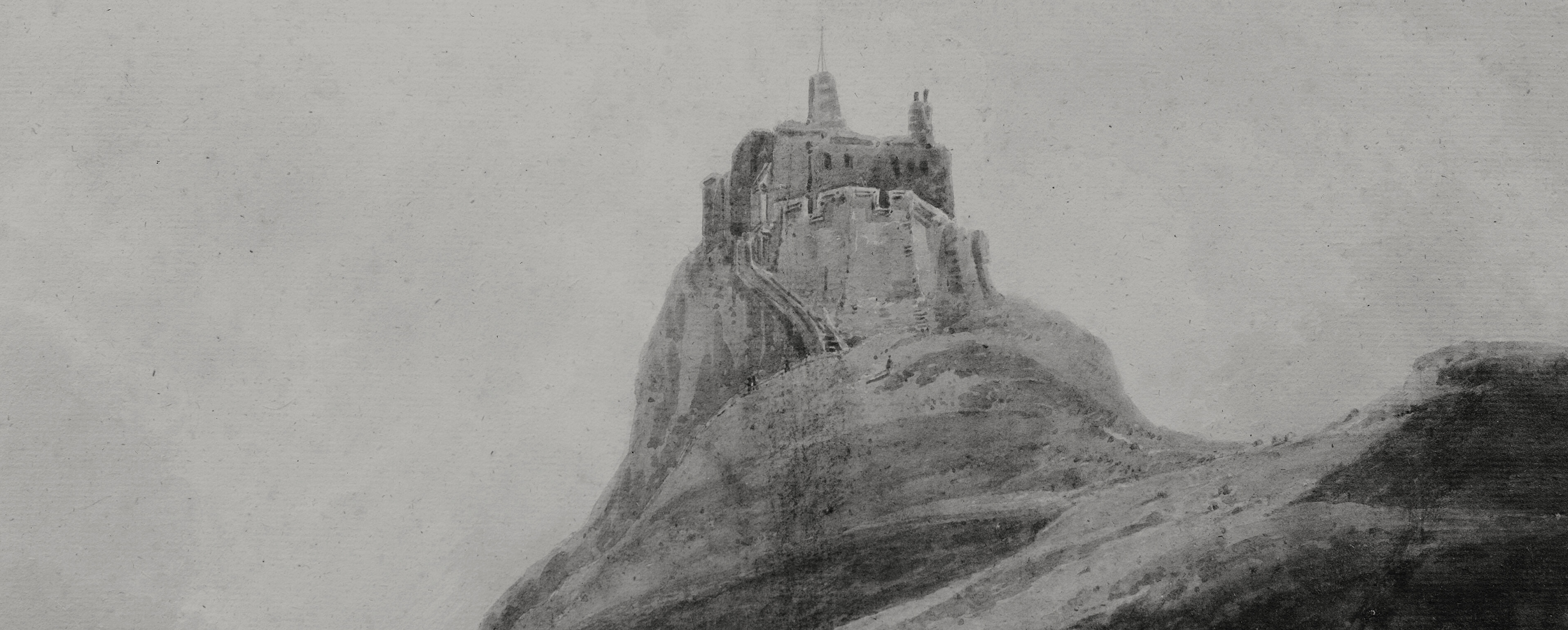
Thomas Girtin. Lindisfarne Castle, Holy Island, Northumberland, 1796–97. The Metropolitan Museum of Art
LORDS OF THE NORTH BY BERNARD CORNWELL
After an unlikely victory in the previous book, Lords of the North begins with Wessex free of Vikings. Uhtred, who helped King Alfred win a great victory, is disappointed in the king’s lack of generosity and flees to pursue an old blood feud with Kjartan the Cruel, the Danish lord who killed his foster father and took his stepsister captive. His only ally is Hild, a Saxon nun fleeing her calling.
By this time, Uhtred has earned a reputation as a great warrior. He assists in the release of Guthred, a slave who is believed to be a king. Guthred dreams of a kingdom of both Saxons and Vikings and enlists Uhtred to be part of his household guard. Unthred agrees partially because of his attraction to Guthred’s sister, Gisela, and knowing the fate of Cumbria will inevitably lead to the stronghold of Dunholm and the lands of his nemesis, Kjartan and his son, one-eyed Sven. That is, until Uhtred is betrayed and sold into slavery.
Lords of the North was a compelling third book in the Saxon series by Bernard Cornwell. I enjoyed the book's pacing, and I never felt as though the story lagged or became muddled. There was room for epic battles, love affairs, and political intrigue within each page. The resurfacing of the old blood feud between Uhtred and Kjartan was also riveting, even if, as a reader, I knew that Uhtred would survive in the end. Cornwell deliberately includes passages in which Uhtred narrates the story in his old age. Even so, I wanted to know how he would exact his revenge and whether there would be a great loss amid the epic battle.
I greatly enjoy the depiction of historical figures and plausible scenes of the 9th century. What I do struggle with are the descriptive passages where blood, gore, and rape occur. I still like the series, and I find the history incredibly intriguing, but I do struggle with some of the more brutal scenes.
I am going to give the next book a chance and see how it goes. I want to know what happens in the story that alone proves that Cornwell is a great writer. Even when I am unsure whether the series is the best thing for me to read, I feel compelled to keep going.
Julius Gari Melchers. Mother and Child, c. 1906. The Art Institute of Chicago
LESSONS IN CHEMISTRY BY BONNIE GARMUS
Chemist Elizabeth Gott is not like most women, and in the 1960s, she struggles with her all-male team at work and societal norms that care little for her views on equality. That is, until she meets a fellow scientist, Calvin Evans, a brilliant Nobel-prize-nominated man known for his deep-seated grudges. When the pair meet, Calvin is fascinated by her mind and physique, and the chemistry between them is unmistakable.
And yet, life does not work out as people think, leading Elizabeth Zott to find herself a single mother and a reluctant TV star on a beloved cooking show, Supper of Six. Elizabeth’s unorthodox approach to cooking not only educates her spellbound audience in the details of chemistry but also pushes further, challenging the status quo, which her audience ferociously devours.
Wry, witty, and observant, Lessons in Chemistry opens a window into the past and shrewdly exposes a world rife with hypocrisy, sexism, and bias.
Lesson in Chemistry was extremely popular when I put the book on hold and the library and I had to wait for five months before it was available. The time crunch of knowing I had only three weeks compelled me to get through the book, and as I started, I was ready to throw it into the heap of contemporary books that just did not hit the mark, but I kept reading and reading. This was the first book in a long time that I laughed out loud so many times. I loved Garmus’ witty sense of humor and her sharp observations on gender inequality.
“No surprise. Idiots make it into every company. They tend to interview well.”
This was the first of many lines that made me laugh, and I enjoyed the way Garmus filtered these sorts of clever lines through different characters throughout the book.
Once the story took off, I could not put it down, and even though it is a fairly large book for a contemporary read, I finished it in less than a week. Elizabeth Zott’s character was the sort of curious nonconformist I enjoy rooting for, and the story was refreshingly relatable, even if it read much like a story about blowing apart the nostalgic whitewashing of the 1960s. The fact that so many of the horrible characters received their comeuppance made the reading of Lesson in Chemistry wonderfully cathartic.
The ending did feel a bit too tidy. Everything was sorted out, and I tend to like books that leave a few strings untied, allowing my imagination to take the story further. Be that as it may, I still greatly enjoyed the book, and sometimes it is nice to have all the circles connected and the story to complete. I highly recommend this book as it was both entertaining and eye-opening.
One thought I had throughout the book was that if people think women are not treated well now, just go back a few decades, and it was way worse. Go back hundreds of years, and tales of the treatment of women would turn your stomach. Even if things are better, that does not mean they cannot be improved. I was still struggling with feeling a bit low after the holidays, and this book perked me right up, compelling me to go out there, brave and bold.
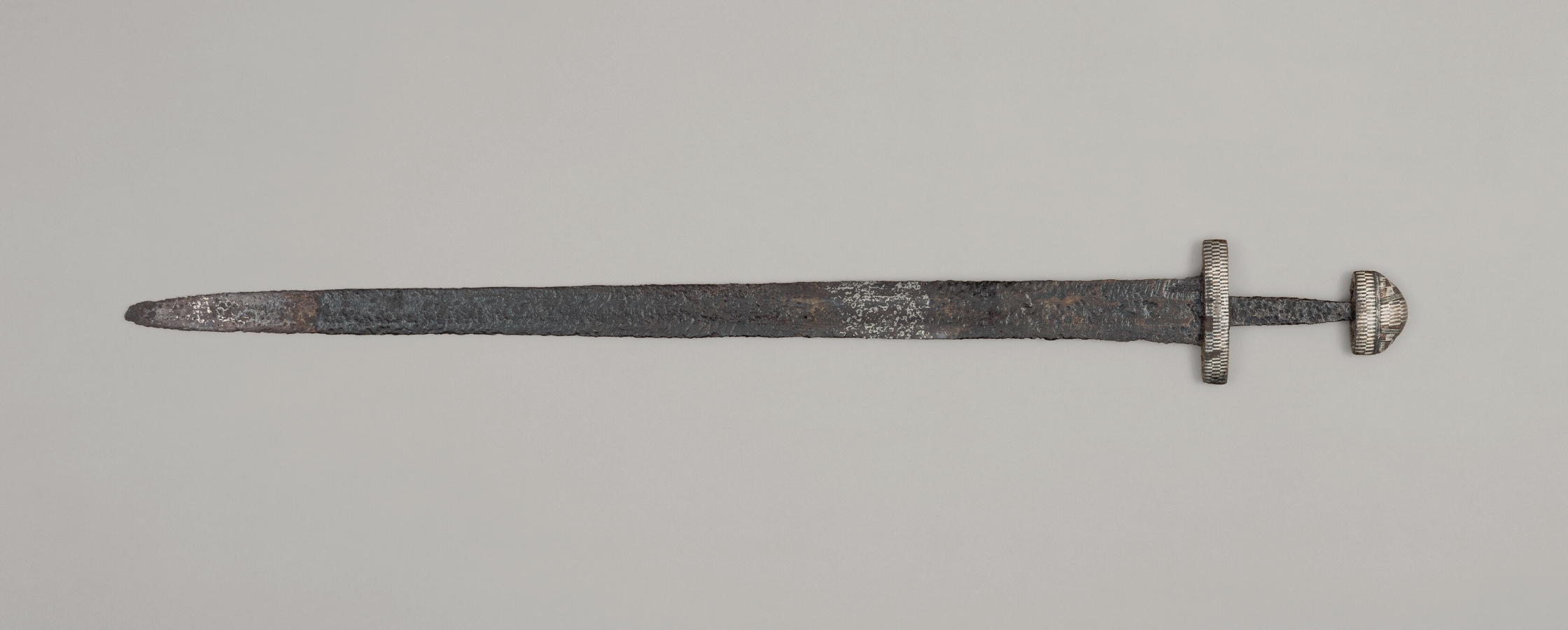
European, probably Scandinavia. Viking Sword, 10th century. The Metropolitan Museum of Art
SWORD SONG BY BERNARD CORNWELL
In 885, there is peace with the Danish kingdom in the North and the Saxon kingdom in the South. The formidable warrior Uhtred—Saxon by birth, raised as a Viking—has settled with a wife and children beholden to King Alfred. Then a dead man rises, and new Vikings arrive, capturing the old Roman city of Lundene (London). The Vikings want Uhtred to help them conquer Wessex, but Alfred commands Uhtred to take back the city.
Uhtred has to uphold the honor of his oath to a king he loathes and to gauge the shift of power to decide where to establish his allegiance. Added to the turmoil, Alfred’s newly married daughter is kidnapped her existence now threatens Alfred’s kingdom. It is up to Uhtred to decide the fate of England.
Although many parts of this series depict women being brutalized, there are also many strong female characters. Every woman who becomes a companion to Uhtred is strong and determined. Brida continues to stand by Ragnar’s side and is one of the strongest female characters, even though she seldom appears in the story. The history of England's making is of constant interest as I read this series, but the women make it a better story.
Again, I struggled with the brutal nature of the battle scenes. I will admit that in this book, I skimmed the more gruesome sections and made sure to return to the dialogue to stay connected to the story. I am on the fence about whether to continue the series solely because of the brutal depictions, but perhaps I can find a balance that lets me capture the story's essence while glancing over the more gruesome details.
Charles Warren Eaton. Woods in Winter, 1886. National Gallery of Art
WHEN CHRIST AND HIS SAINTS SLEPT BY SHARON KAY PENMAN
The death of England’s King Henry I in 1135 AD brings about the undesirable prospect of the country being ruled by a woman, Maude, Countess of Anjou, and the King’s only remaining legitimate child. Before Maude can claim the throne, her cousin Stephen seizes the crown. The years that follow are what are considered a time of anarchy, when England bled and burned. —Goodreads
This is the fourth book I have read by Sharon Kay Penman, and, as with her Welsh series, I was immediately drawn into the story. For some, Penman’s depictions and writing may be on the slower side, but I enjoyed the fact that she takes her time with her scenes and does a good job of painting a picture of medieval England.
I also appreciated that Penman is less graphic in her writing compared to her fellow historical fiction authors. I have a gentle soul and a strong visual imagination. When depictions get too violent, especially against women, I tend to struggle.
I was immediately drawn into the story of Empress Maude and her nephew, King Stephen. I was less familiar with this era of English history, but it all came together when Henry II ascended the throne and began the Plantagenet dynasty. The exploits of Maude trying to evade the clutches of Stephen were fascinating, and I was happy to learn that they actually happened. All in all, this was a wonderful read, and I am excited to continue the series, which expands on the life and legacy of the infamous Eleanor of Aquitaine and her relationship with Henry II and their children, Richard the Lionheart and his younger brother, John. Penman is detailed in her storytelling, and I love delving into her historical world.