APRIL 2024 READING LIST
There is nothing like a slow reading month to spur a reading surge in the following weeks. Some months ago, a friend recommended Libby to find a more substantial supply of audiobooks, and I finally gave the app a try. This has helped me discover more attainable books to read, and my reading has increased abundantly. I rediscovered a series I had previously disregarded, and although it is not the most complex, it is enjoyable and easy to listen to.
I finally completed the substantial Theodore Roosevelt trilogy by Edmund Morris. I started the first of the series at the beginning of last year, and it feels good to make some headway in my challenge of reading through presidential biographies. I also attempted to read a book by a local author. I like the idea of my future reading to include a sprinkling of local writers.
Here is the list of the books that I completed in April:
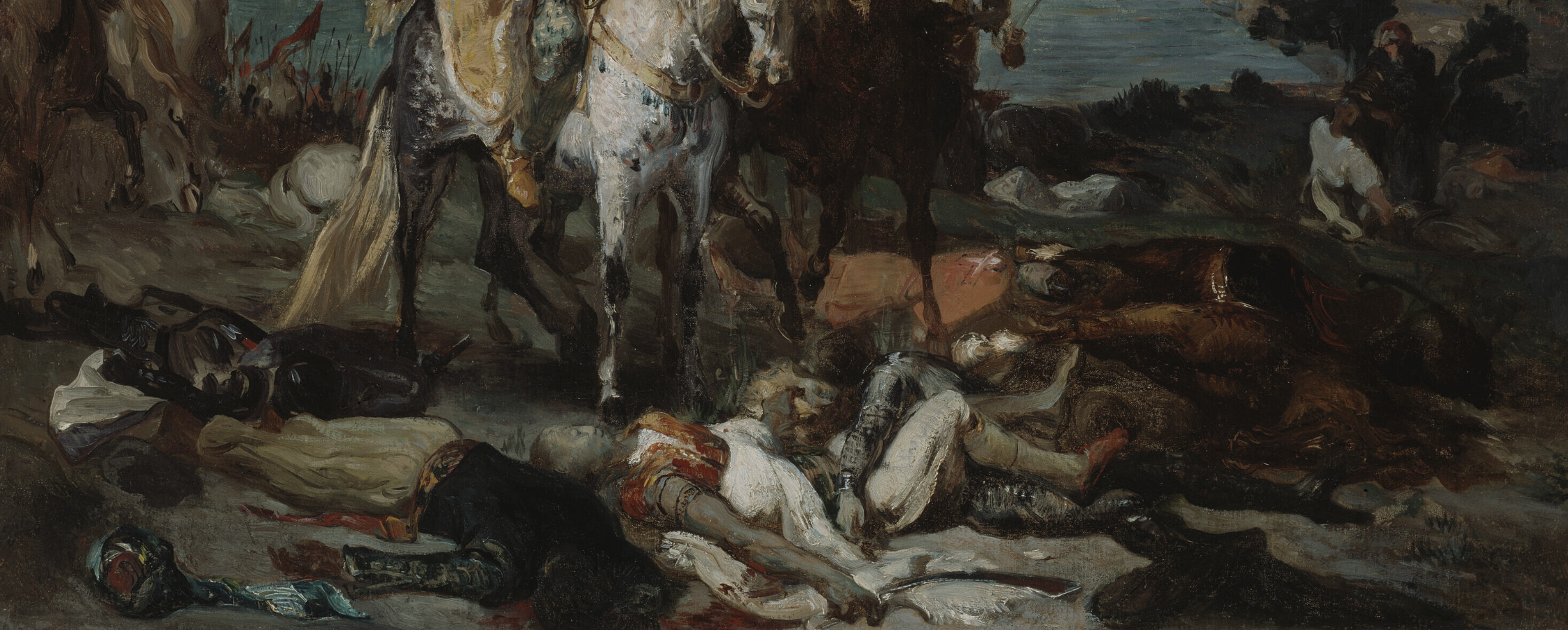
Style of Théodore Chassériau. Saracens and Crusaders, c. 1846. The Art Institute of Chicago
LIONHEART BY SHARON KEY PENMAN
Lionheart is the fourth book in Sharon Kay Penman’s Plantagenet Series and continues the tale of the Angevin family. This book, of course, focuses much attention on the second son of Henry II and his infamous heroics on the battlefield during the Third Crusade. Although I am familiar with Richard from the stories of Robin Hood, this book broadened my understanding as to why he was so memorable. The sections of the book that discuss his battle tactics were fascinating, and as a reader, I gained a better understanding of the importance of making wise decisions when facing an enemy in foreign lands.
I read this book fairly quickly as Penman kept a good pace with the story of Richard and the many battles he faced. I also liked the way Penman wrote about Sicily. The country embraced multiple religions, ethnicities, and languages, as well as cultural practices and cuisines, in a mix reminiscent of America today. However, along with a high level of tolerance, the country also embraced slavery, and the King had even adopted the practice of keeping a harem. It goes to show that wide-ranging liberties can also have their faults.
I appreciate authors wanting to humanize historical characters and bring more feminine voices to the forefront. Because of the nature of domesticity for women in much of history, their stories tend to be related to marriage and children. That is why the telling of Eleanor of Aquitaine was so refreshing. Yes, she had many children, but her story was less about her time in confinement and more about her prowess, intelligence, and resilience. The sections I had trouble reading were those where different couples discussed their family planning.
I am marking Lionheart as my second-favorite book in the series, after the first, When Christ and His Saints Slept. The reading pace was great, and several interesting subplots added intrigue to the story. The end of the book gives an inkling of what lies ahead with Richard’s infamous capture by the Duke of Austria and what that may mean for his reign, but that story will be completed in The King’s Ransom, the fifth and final book of the series.
4/5 stars

Eugène Carrière. The Contemplator, 1901. The Cleveland Museum of Art
RESET BY SARINA DAHLAN
Can you love someone you don’t remember?
An intriguing idea of a new world in Sarina Dahlan’s dystopian novel, Reset. After the Last War, The Four Cities emerged with the intent to eradicate the prejudices and wars that led to such a catastrophe. In Tabula Rasa, everyone's minds are erased every four years. In each new cycle, people receive a new name, a new home, and a new job.
Most of the story focuses on Aris and Metis as they navigate, a focus that is both inspirational and oppressive. Dahlan writes a stimulating story for those who believe in soulmates and the draw of love through restrictive obstacles. It is hard to describe the story without giving away any spoilers.
I will say the story started a bit slowly, but picked up as I continued reading and became incredibly intriguing by the end.
After finishing Reset, I immediately wanted to know more about how The Four Cities were created and what led to the Dreamers who seemed to clash with the social order of the new society. Thankfully, she has written a prequel to Reset called Preset, a book that delves into the creation of the utopian world and provides more backstory to The Four Cities.
If I find that Preset helps me better understand the world Dahlan has created, then I plan to try her sequel to Reset called Freeset. The sequel imagines a world where nothing can be completely controlled, and love will always strive to be free.
3/5 Stars
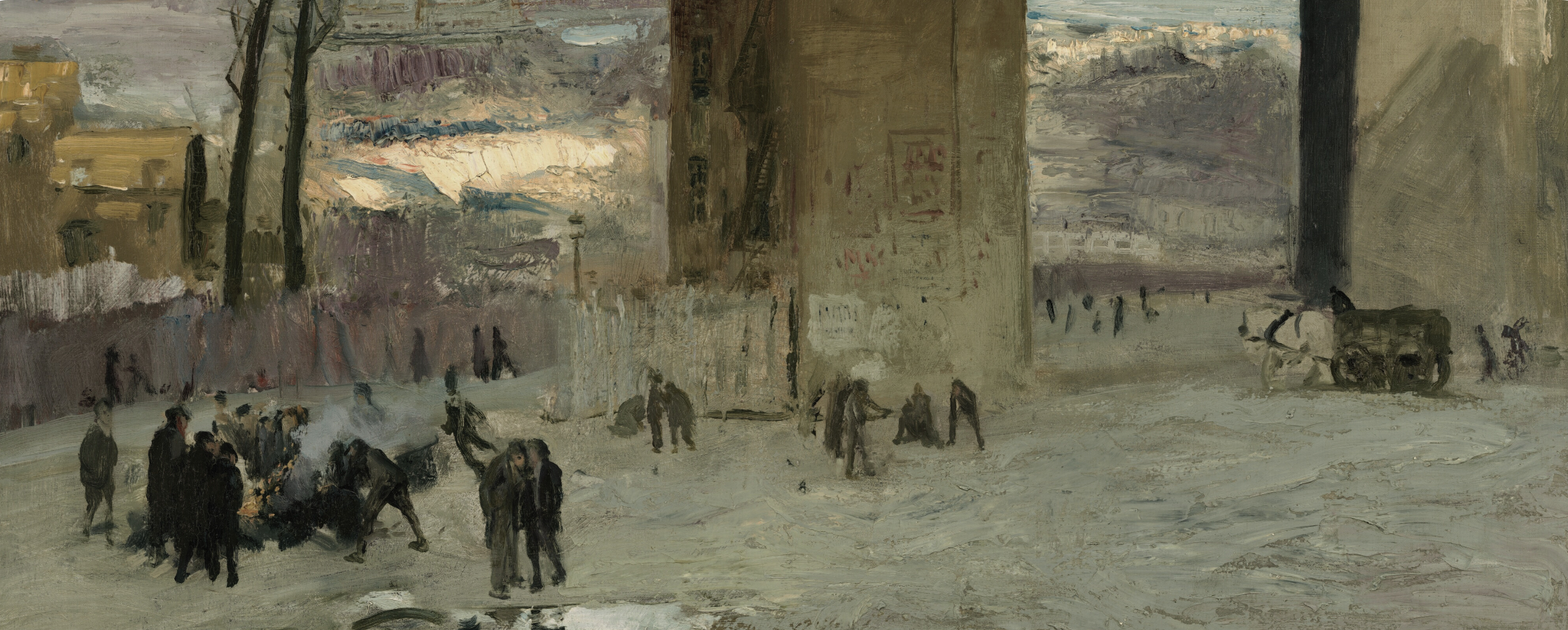
George Bellows. The Lone Tenement, 1909. National Gallery of Art
MURDER ON ASTOR PLACE BY VICTORIA THOMPSON
When I first read the dust jacket to the Gaslight Series, I thought, A midwife who solves mysteries, please. Although I enjoy female-led murder mysteries, they can also verge on the ridiculous. I believed Murder on Astor Place would be one of them, and I had images of a pesky New York socialite attempting detective escapades, which would be completely unbelievable and a bore. When I found the series on Libby, I decided to give it a try anyway. I was thoroughly surprised at how well the book was written. I found I enjoyed the book so much that I quickly retrieved the second book in the series.
Thompson does well to introduce most of her main characters in this first book, as well as the budding love interest between the midwife, Sarah Brandt, and the detective, Frank Malloy. Yet she does not rush their relationship; instead, she allows their interactions to be both sparked by tension and to provide moments of warmth. The quirky neighbor was predictable but not obnoxious and added some humor to the story.
What works well in this book is the mystery's complexity. Some books, especially period pieces, tend to be predictable, and the solutions are somewhat of a letdown. Thompson does well to lead the two sleuths on a path of discovery without giving away the mystery too soon.
There are just enough historical references to connect the reader to the time period, without spending too much time on every detail. The book was informative, but the story was always the focus, the history hovering in the background. I am excited to read the next book and see if it is as compelling as the first.
4/5 Stars

Alfred Stieglitz. The Glow of Night, New York, 1897. Harvard Art Museums
MURDER ON ST. MARK’S PLACE BY VICTORIA THOMPSON
I listened to Murder on St. Mark’s Place. I was as captivated with the second book in this series as I was with the first. I have made peace with the midwife sleuth, Sarah Brandt, and I actually appreciate her medical skills as being realistic for the period. I also like that she stands up to Sergeant Malloy, while in the book, there is a little softening on his part toward Sarah.
The setting of Coney Island is the backdrop in this book, and the focus is on young girls who sell their favors, not for money, but for lavish gifts. Thompson writes well to tell the girls' stories and expose a society that leads girls to such unsavory behavior.
I enjoy the back-and-forth between Sarah Brandt and Frank Malloy. There is lovely tension that does not come across as squeamish or flighty. It is easy for a writer to fail at the relationship sections of a book. Thompson provides a balance of progress and resistance in the relationship, and it is enjoyable to read. This balance makes the story more believable and therefore
As for the mystery, it is great for an avid reader to have the story NOT be predictable. My idea of who the murderer was danced around to several different people. Thompson also writes in a style that bounces between points of view in each chapter, leaving delightful cliffhangers and maintaining a good pace that lets readers inch closer to the story’s conclusion.
Footnote: There are certainly mentions of prostitution, although the descriptions are not vivid. There are also mentions of domestic abuse and the sorry state of why so many women stay with violent husbands.
4/5 Stars

Claude François Fortier. Forest in Brazil, 19th century. Harvard Art Museums
COLONEL ROOSEVELT BY EDMUND MORRIS
I finally finished the third installment of Edmund Morris’s Theodore Roosevelt trilogy. It was a bit of a haul, even though this book was shorter than the other two. I knew little of Roosevelt after his time in the White House. Reading Colonel Roosevelt, I learned about his South American adventures, an assassin’s attempt on his life, and his third-party presidential campaign.
What was fascinating about this book was Morris’s way of interweaving elements in other countries, stories from everyday people, and decisions by different governments in what would lead to World War One. People could see it on the horizon, and the inevitable clashing of an old world against the new. The small inserts of these stories were incredibly insightful and profound.
Morris also shares the nuances and differences between Roosevelt and Woodrow Wilson. His writing gave a glimpse of what the world would have been like if the Democrats had not pulled out a win in 1912. The world would not look the same today if Roosevelt had been president. He was eager to get into the war, nearly begging for his own contingent of soldiers, whereas Wilson was all restraint.
Roosevelt led an interesting life, and I enjoyed reading Edmund Morris’s wonderful writing. I highly recommend this book and the trilogy as a whole.
4/5 Stars